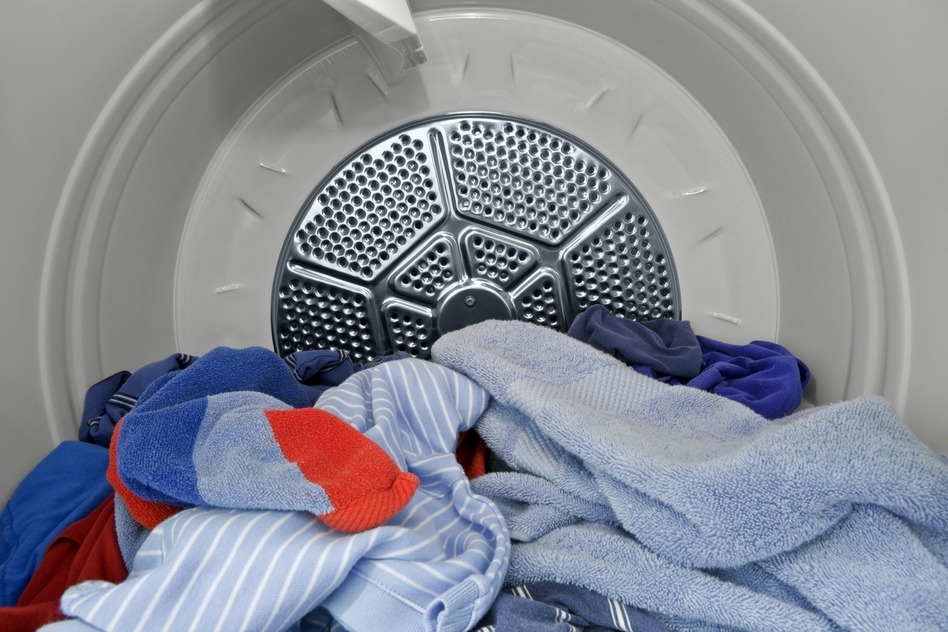
10 Tips for Saving Energy in the Laundry Room

10 Tips for Saving Energy in the Laundry Room

Knowing how to save energy while doing laundry is a good start to helping you trim energy costs in your home.

Here’s a fun laundry room fact: The average American family washes 300 loads of laundry a year, spending about 68 cents per load, for a yearly total of $204.

Most laundry room expenses come from heating water for washing and heating air for drying. But these costs aren’t set in stone, and you can save money by following these energy-reducing tips.

Get the Most From Your Washer

Ninety-percent of the cost of running a washer goes to heating water. Only 10% goes to electricity needed to run the motor. Here’s how to save money while getting your clothes clean.

1. Use cold water. You can save a bundle by washing your clothes in cold water, which is a perfectly efficient way to clean most clothes. Washing a load in cold water costs only about 4 cents, compared to washing in hot/warm water for 68 cents. Annually, you’ll save $40 with an electric water heater and $30 with a gas water heater.

2. Run full loads. It takes as much electricity to wash a small load as it does a full one, so you’ll save money by only washing full loads.

3. Update your machine. If you don’t already have an Energy Star-certified washer, it’s time to get one. These energy-efficient machines use 15 gallons of water per load, compared to 23 gallons for a standard machine. If a gallon of water costs you a penny (the U.S. average), you’ll save $24 a year.

4. Buy a front-loading machine. They use two-thirds less water than top-loaders, reducing water and heating costs.

Related: How to Buy a Washer

Get the Most From Your Dryer

5. Spin faster. The faster you spin clothes in the washer, the less time they’ll need in the dryer. If you have the option, chose a faster spin cycle.

6. Clean lint filters. Remove lint after every load, and clean ducts annually. Your clothes will dry faster, using less energy.

7. Warm it up. If possible, locate your dryer in a warm laundry room rather than in a cold basement. The warmer the air coming into the dryer, the less energy your machine will use to heat it up.

8. Go gas. Drying a load of laundry in a gas dryer generally costs 15 to 33 cents less per load than an electric dryer (32 to 41 cents).

9. Keep it full. Dry only full loads, and try not to mix fast and slow-drying clothes — a practice that wastes energy by continuing to dry clothes that are no longer wet.

10. Let nature help out. When the weather is warm, cut your energy costs by drying clothes outside on a clothesline. If HOA regulations don’t allow you to set up a clothesline outside, then use a stand-alone drying rack inside.



By: Douglas Trattner© Copyright 2015 NATIONAL ASSOCIATION OF REALTORS®


How to Help Your Appliances Last Longer

How to Help Your Appliances Last Longer


Is it just me or does it seem that appliances don’t last as long as they’re supposed to?
Our dryer died after 11 years (two years before a typical dryer’s lifespan is up), and we repaired our refrigerator three times before it reached its 12th birthday (it’s supposed to live for 13 years).

Full disclosure: I wouldn’t give myself an A in appliance care. But in the future, I vow to keep up on regular maintenance that’ll keep my new dryer running longer than my last one.

Rob Carpenter, owner of a Mr. Handyman franchise in Maryland, shares some insider tips about how to extend the life of home appliances.

Refrigerators That Last

Refrigerators break down when doors don’t close tightly, forcing motors to work overtime to keep food cold. To test your door seal, close the door on a dollar bill: If the bill slips, you’ve got a problem that requires refrigerator maintenance.

Magnetic strips embedded in gaskets around refrigerator doors make doors close snugly, but they routinely wear out and should be replaced or re-magnetized every couple of years. If you’re handy, re-magnetizing is a DIY job — just run a powerful magnet along each side of the gasket, in the same direction, about 50 times.

If messing around with the refrigerator door is beyond your pay grade, call a professional. Pros typically charge around $242 to repair door problems.

Related: How to Buy a Refrigerator

Washing Machine Endurance

Loose change banging around your washer drum can cause dents, chipped paint, and rust, so make sure to empty pockets before washing clothes.

Also, maintain your washing machine by regularly cleaning or replacing filters that trap water sediment before it enters your machine. Filters, which look like thimbles, are located in the back where supply hoses attach to the machine. Remove hoses and either poke out debris with a tip of a flathead screwdriver, then remove and wash the filter, or replace it.

Dryers That Keep on Drying

In addition to regularly cleaning out your dryer’s lint trap and exhaust hose, inspect the exterior vent — hot air must escape your house unimpeded.

Make sure the hinged exterior vent pops open when the dryer runs. If it doesn’t, open the cover and scrape out lint with the end of a hanger or dryer vent brush ($13). If your vent is louvered, clean slats with an old toothbrush.

When my dryer recently lost its heat, we called a repair guy who discovered a family of sparrows living in the vent. He sucked the birds out (poor birdies), and then we covered the vent opening with a wire mesh.

Related: The World’s First Solar-Powered Laundry Dryer
Dishwasher Extenders

Here are ways to keep your dishwasher stress-free and long-lasting:

  • Prime your dishwasher by running the hot water in your sink before you begin the cycle. This will clean your dishes with hot water from the very start of the cycle.
  • Once a week, run your dishwasher empty except for a cup of vinegar, which will keep it shining and smelling fresh.
  • Clean out food traps regularly.
  • Wipe clean the seals around dishwasher doors.

Related: Which Homemade Dishwasher Soap Recipe is Best?
Toaster Thoughts

Darkly toasted bread will burn out your toaster two years earlier than lightly toasted bread. So if you can live with lightly crisp rather than almost burnt, you’ll get a few more years out of your toaster. Just saying.

What’s your oldest appliance? What did you do to keep it humming?


By: Lisa Kaplan Gordon© Copyright 2015 NATIONAL ASSOCIATION OF REALTORS®


4 Money-Saving Ways to Add Style and Function to Your Yard

4 Money-Saving Ways to Add Style and Function to Your Yard

Homeowners wow with clever DIY outdoor projects on a budget.

No doubt, exterior upgrades like adding a wood deck or installing new garage door offer great return on investment that’s worth the cash outlay. But these four blogger projects will ratchet up your curb appeal for a lot less money. And your friends will think you hired a pro.

A Champagne Fence on a Beer Budget

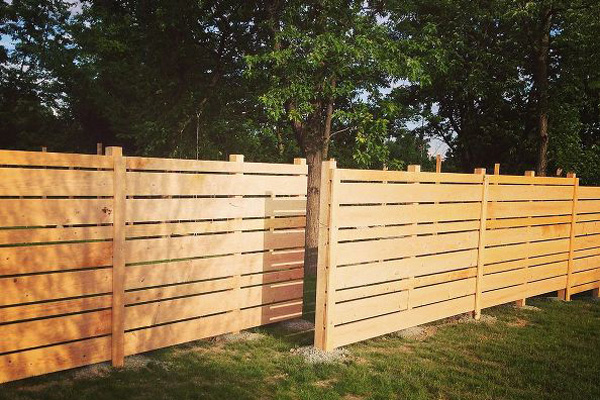
DIY wood fence in a yard
Image: The Unique Nest

Laura, the blogger behind The Unique Nest, wouldn’t let her limited funds put a damper on her curb appeal vision. Her DIY fence enclosed a 1/4-acre side yard for only $1,000.

Not only is it beautiful, it’s functional: It keeps her kids and dog safely in the yard and adds privacy and value.

She and her hubby:

  • Sketched out their design to calculate how much lumber they needed. The project required around 250 pieces of rough-cut Hemlock wood.
  • Contacted Dig New York, a nonprofit that marked underground utility cables and pipes on the property, so they could dig safely.
  • Rented an auger — essentially a giant drill — to dig holes. Their project required 29 fence posts. The rental made the four-day building process a lot easier.

Get all the project details.

Tip: If you have a wood fence, apply stain or wood preservative every three to five years to protect it from bugs, rot, and sun damage.

Related: A Guide to Fencing Options

The Landscaping Power of a Little Concrete Edging

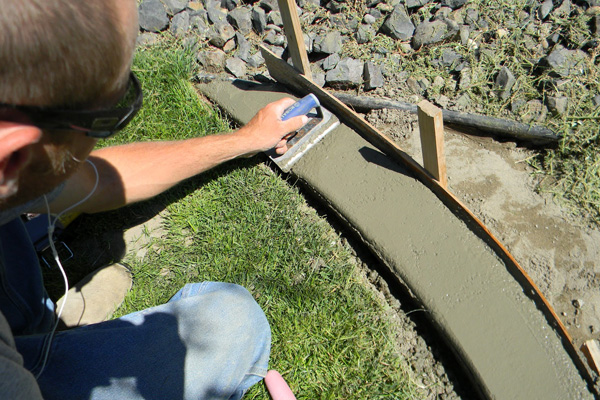
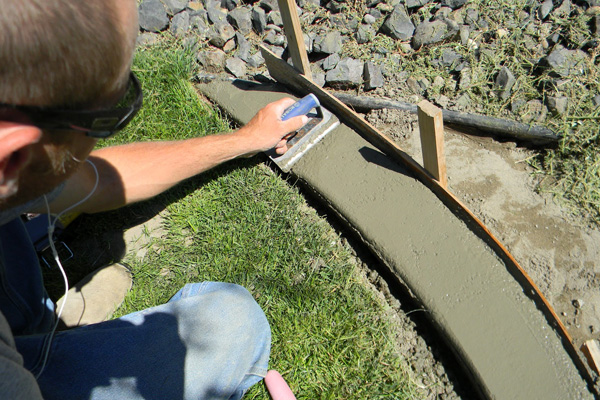
Man smoothing concrete edge in a garden
Image: Home is Where They Love You

Besides adding spit and polish to your landscape, edging can help keep weeds and grass from overrunning your garden.

Camie, from the blog Home is Where They Love You, thinks her decorative and functional concrete curb looks like a pro job, and we agree. Even better, she created it for less than $20.

In a nutshell, she and her husband:

  • Crisply defined the garden’s border while also creating the curb’s form using bender board and wood stakes.
  • Poured the concrete into the form.
  • Used an edging trowel to smooth out the curb’s shape.

Get all the project details.

Related: Use a Garden Hose to Design Your Edging
A Driveway That Just Looks Expensive

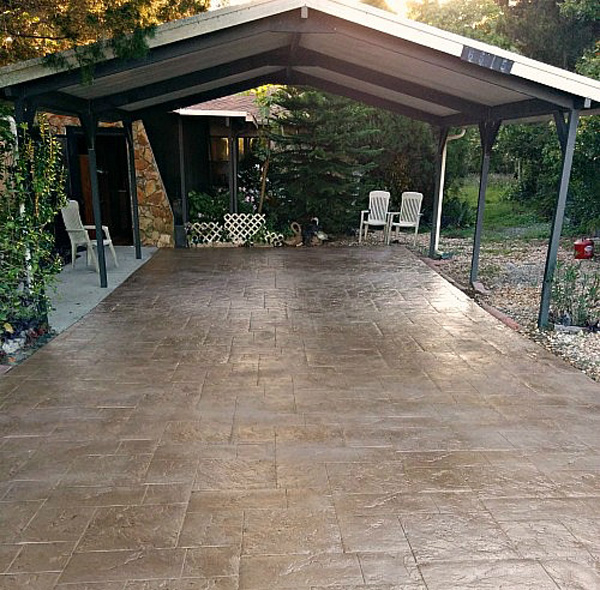
DIY stamped concrete drivewayImage: DIY Fun Ideas

When Jenise from DIY Fun Ideas created this tile driveway at her mom and pop’s place, she became a serious contender for world’s best daughter.

But, here’s a secret: She says this concrete project is so easy that even a DIY novice can build it.

Here’s quick breakdown of the project’s three basic steps.

1.  Mix mortar in a bucket.
2.  Spread the mortar into a tile mold.
3.  Place the freshly minted tile into place on the driveway.

And get this: A pro might charge $10 per square foot to build a driveway like this one; Jenise’s project cost about $3 per square foot.

Get all the project details.

Related: Why You Should — and Shouldn’t — Go with Stamped Concrete
A Garden Tool Organizer to Love

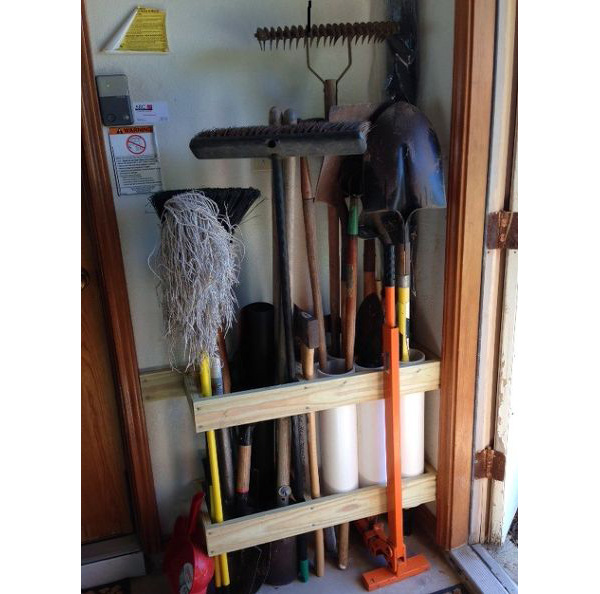
DIY garden tool rack made with PVC pipe and woodImage: Ouina, HomeTalk.com contributor, Edinburg, Texas


Love to putter around in your garden, but hate trying to retrieve yard tools from a disorganized jumble in your garage?

Ouina, an avid tipster to the HomeTalk.com online community, concocted a clever built-in that keeps rakes, spades, trowels, and pruners neatly grouped in a garage or shed corner.

She:

  • Created the built-in using precut lumber and PVC pipe.
  • Attached the lumber used to create the wood frame to the wall studs.
  • Mounted PVC pipe onto the wood frame to keep it off the floor. This makes cleaning up around the built-in easier.

Get all the project details.


By: Deirdre Sullivan© Copyright 2015 NATIONAL ASSOCIATION OF REALTORS®

How to Use Comparable Sales to Price Your Home

How to Use Comparable Sales to Price Your Home

Before you put your home up for sale, understand how the right comparable sales help you and your agent find the perfect price.

Before you put your home up for sale, understand how the right comparable sales help you and your agent find the perfect price.

Knowing how much homes similar to yours, called comparable sales (or in real estate lingo, comps), sold for gives you the best idea of the current estimated value of your home. The trick is finding sales that closely match yours.

What makes a good comparable sale?

Your best comparable sale is the same model as your house in the same subdivision—and it closed escrow last week. If you can’t find that, here are other factors that count:

Location: The closer to your house the better, but don’t just use any comparable sale within a mile radius. A good comparable sale is a house in your neighborhood, your subdivision, on the same type of street as your house, and in your school district.

Home type: Try to find comparable sales that are like your home in style, construction material, square footage, number of bedrooms and baths, basement (having one and whether it’s finished), finishes, and yard size.

Amenities and upgrades: Is the kitchen new? Does the comparable sale house have full A/C? Is there crown molding, a deck, or a pool? Does your community have the same amenities (pool, workout room, walking trails, etc.) and homeowners association fees?

Date of sale: You may want to use a comparable sale from two years ago when the market was high, but that won’t fly. Most buyers use government-guaranteed mortgages, and those lending programs say comparable sales can be no older than 90 days.

Sales sweeteners: Did the comparable-sale sellers give the buyers downpayment assistance, closing costs, or a free television? You have to reduce the value of any comparable sale to account for any deal sweeteners.

Agents can help adjust price based on insider insights

Even if you live in a subdivision, your home will always be different from your neighbors’. Evaluating those differences—like the fact that your home has one more bedroom than the comparables or a basement office—is one of the ways real estate agents add value.

An active agent has been inside a lot of homes in your neighborhood and knows all sorts of details about comparable sales. She has read the comments the selling agent put into the MLS, seen the ugly wallpaper, and heard what other REALTORS®, lenders, closing agents, and appraisers said about the comparable sale.

More ways to pick a home listing price

If you’re still having trouble picking out a listing price for your home, look at the current competition. Ask your real estate agent to be honest about your home and the other homes on the market (and then listen to her without taking the criticism personally).

Next, put your comparable sales into two piles: more expensive and less expensive. What makes your home more valuable than the cheaper comparable sales and less valuable than the pricier comparable sales?

Are foreclosures and short sales comparables?

If one or more of your comparable sales was a foreclosed home or a short sale (a home that sold for less money than the owners owed on the mortgage), ask your real estate agent how to treat those comps.

A foreclosed home is usually in poor condition because owners who can’t pay their mortgage can’t afford to pay for upkeep. Your home is in great shape, so the foreclosure should be priced lower than your home.

Short sales are typically in good condition, although they are still distressed sales. The owners usually have to sell because they’re divorcing, or their employer is moving them to Kansas.

How much short sales are discounted from their market value varies among local markets. The average short-sale home in Omaha in recent years was discounted by 8.5%, according to a University of Nebraska at Omaha study. In suburban Washington, D.C., sellers typically discount short-sale homes by 3% to 5% to get them quickly sold, real estate agents report. In other markets, sellers price short sales the same as other homes in the neighborhood.

So you have to rely on your real estate agent’s knowledge of the local market to use a short sale as a comparable sale.

More from HouseLogic

What You Must Know About Home Appraisals

6 Reasons to Reduce Your Home Price

By: Carl Vogel© Copyright 2015 NATIONAL ASSOCIATION OF REALTORS®


Home Prices Up 25% Over Three Years

Home Prices Up 25% Over Three Years

Published: February 11, 2015

Prices increased steadily due to a shrinking supply of homes for sale and a growing number of homebuyers entering the market to take advantage of low mortgage interest rates, said NAR Chief Economist Lawrence Yun.

“Home prices in metro areas throughout the country continue to show solid price growth, up 25% over the past three years on average,” he said. “This is good news for current homeowners but remains a challenge for buyers who are seeing home prices continue to outpace their wages. Low interest rates helped preserve affordability last quarter, but it’ll take stronger income gains and more housing supply to help meet the pent-up demand for buying.”

The five most expensive housing markets in the fourth quarter:
1.  San Jose, Calif., $855,000
2.  San Francisco, $742,900
3.  Honolulu, $701,300
4.  Anaheim-Santa Ana, Calif., $688,500
5.  San Diego, $493,100

The five lowest-cost metro areas in the fourth quarter:
1.  Youngstown-Warren-Boardman, Ohio, $78,000
2.  Rockford, Ill., $86,800
3.  Toledo, Ohio, $87,100
4.  Decatur, Ill., $90,400
5.  Cumberland, Md., $90,500

The national median existing single-family home price in the fourth quarter was $208,700, up 6.0% from the fourth quarter of 2013 ($196,900).

At the end of the fourth quarter, there were 1.85 million existing homes available for sale. That’s a 4.9-month supply given the pace at which homes are selling. A supply of six to seven months represents a healthy balance between buyers and sellers.

“Despite affordable housing conditions in most of the country, an upward pressure on home prices still persists in some metro areas — particularly in the West — where the current supply of new and existing homes for sale is failing to keep pace with overall demand and growing populations,” said Yun. “Unless homebuilders significantly boost construction, housing supply shortages could develop and lead to further price acceleration this spring.”

Condo and Co-op Prices

Nationally, condominium and cooperative prices (NAR measures those in 61 metro areas) reached $203,300 in the fourth quarter, up 3.3% from the fourth quarter of 2013 ($196,900).

Forty-six metro areas (75%) showed increases in their median condo price from a year ago; 14 areas had declines.

NAR President Chris Polychron said REALTORS® throughout the country are reporting slightly improved buyer demand compared with a year ago. “Interest rates below 4%, rising rents, and healthier local job markets are convincing more consumers to consider homeownership,” he said.

To measure affordability, NAR compares the median income ($65,782 nationally) and median home price ($208,700).

How Much Income Do You Need to Buy the Median Single-Family Home?

Downpayment Income Needed to Buy $208,700 Home
5% $45,863
10% $43,449
20% $38,621

Existing Home Price by Region

Q4 Median Price Price Change vs. 2013
Northeast $246,300 Up 2.2%
Midwest $162,000 Up 6.2%
South $183,500 Up 6.2%
West $299,500 Up 4.8%


By: Dona DeZube© Copyright 2015 NATIONAL ASSOCIATION OF REALTORS®

The owner of this website has made a commitment to accessibility and inclusion, please report any problems that you encounter using the contact form on this website. This site uses the WP ADA Compliance Check plugin to enhance accessibility.