
6 Reasons to Reduce Your Home Price

6 Reasons to Reduce Your Home Price

While you’d like to get the best price for your home, consider our six reasons to reduce your home price.

Home not selling? That could happen for a number of reasons you can’t control, like a unique home layout or having one of the few homes in the neighborhood without a garage. There is one factor you can control: your home price.

These six signs may be telling you it’s time to lower your price.

1. You’re drawing few lookers.

You get the most interest in your home right after you put it on the market because buyers want to catch a great new home before anybody else takes it. If your real estate agent reports there have been fewer buyers calling about and asking to tour your home than there have been for other homes in your area, that may be a sign buyers think it’s overpriced and are waiting for the price to fall before viewing it.

2. You’re drawing lots of lookers but have no offers.

If you’ve had 30 sets of potential buyers come through your home and not a single one has made an offer, something is off. What are other agents telling your agent about your home? An overly high price may be discouraging buyers from making an offer.

3. Your home’s been on the market longer than similar homes.

Ask your real estate agent about the average number of days it takes to sell a home in your market. If the answer is 30 and you’re pushing 45, your price may be affecting buyer interest. When a home sits on the market, buyers can begin to wonder if there’s something wrong with it, which can delay a sale even further. At least consider lowering your asking price.

4. You have a deadline.

If you’ve got to sell soon because of a job transfer or you’ve already purchased another home, it may be necessary to generate buyer interest by dropping your price so your home is a little lower priced than comparable homes in your area. Remember: It’s not how much money you need that determines the sale price of your home, it’s how much money a buyer is willing to spend.

5. You can’t make upgrades.

Maybe you’re plum out of cash and don’t have the funds to put fresh paint on the walls, clean the carpets, and add curb appeal. But the feedback your agent is reporting from buyers is that your home isn’t as well-appointed as similarly priced homes. When your home has been on the market longer than comparable homes in better condition, it’s time to accept that buyers expect to pay less for a home that doesn’t show as well as others.

6. The competition has changed.

If weeks go by with no offers, continue to check out the competition. What have comparable homes sold for and what’s still on the market? What new listings have been added since you listed your home for sale? If comparable home sales or new listings show your price is too steep, consider a price reduction.




By: G. M. Filisko:© Copyright 2015 NATIONAL ASSOCIATION OF REALTORS®

Do’s and Don’ts of Homebuyer Incentives

Do’s and Don’ts of Homebuyer Incentives

Homebuyer incentives can be smart marketing or a waste of money. Find out when and how to use them.

Be sure you’re sending the right message to buyers when you throw in a homebuyer incentive to encourage them to purchase your home.

When you’re selling your home, the idea of adding a sweetener to the transaction — whether it’s a decorating allowance, a home warranty, or a big-screen TV — can be a smart use of marketing funds. To ensure it’s not a big waste, follow these do’s and don’ts:

Do use homebuyer incentives to set your home apart from close competition. If all the sale properties in your neighborhood have the same patio, furnishing yours with a luxury patio set and stainless steel BBQ that stay with the buyers will make your home stand out.

Do compensate for flaws with a homebuyer incentive. If your kitchen sports outdated floral wallpaper, a $3,000 decorating allowance may help buyers cope. If your furnace is aging, a home warranty may remove the buyers’ concern that they’ll have to pay thousands of dollars to replace it right after the closing.

Don’t assume homebuyer incentives are legal. Your state may ban homebuyer incentives, or its laws may be maddeningly confusing about when the practice is legal and not. Check with your real estate agent and attorney before you offer a homebuyer incentive.

Don’t think buyers won’t see the motivation behind a homebuyer incentive. Offering a homebuyer incentive may make you seem desperate. That may lead suspicious buyers to wonder what hidden flaws exist in your home that would force you to throw a freebie at them to get it sold. It could also lead buyers to factor in your apparent anxiety and make a lowball offer.

Don’t use a homebuyer incentive to mask a too-high price. A buyer may think your expensive homebuyer incentive — like a high-end TV or a luxury car — is a gimmick to avoid lowering your sale price. Many top real estate agents will tell you to list your home at a more competitive price instead of offering a homebuyer incentive. A property that’s priced a hair below its true value will attract not only buyers but also buyers’ agents, who’ll  be giddy to show their clients a home that’s a good value and will sell quickly.

If you’re convinced a homebuyer incentive will do the trick, choose one that adds value or neutralizes a flaw in your home. Addressing buyers’ concerns about your home will always be more effective than offering buyers an expensive toy.


By: G. M. Filisko:© Copyright 2015 NATIONAL ASSOCIATION OF REALTORS®

Winter Lawn Care: 4 Steps to Protect Your Turf

Winter Lawn Care: 4 Steps to Protect Your Turf

Cold weather on the way means winter lawn care for your backyard.

Although spring lawn care gets all the attention, fall lawn care is the make-it or break-it season for grass.

“I’m already thinking about next year,” says John Dillon, who takes care of New York City’s Central Park, which features 200 acres of lawn in the middle of Manhattan. “The grass I grow this fall is what will be there next spring.”

Fall lawn care is no walk in the park. It’s hard work, and Dillon guides you through the four basic steps.

1. Aeration

Aeration gives your lawn a breather in autumn and provides room for new grass to spread without competition from spring weeds. Aeration tools pull up plugs of grass and soil, breaking up compacted turf. That allows water, oxygen, and nutrients to reach roots, and gives seeds room to sprout.

If kids frequently play on your lawn, plan to aerate twice a year — fall and spring. If your lawn is just for show, then aerate once a year — and maybe even once every other year.

A hand-aerating tool ($20), which looks like a pitchfork with hollow tines, is labor-intensive and meant for unplugging small sections of grass. Gas-powered aerating machines (rental, $20/hour) are about the size of a big lawn mower, and are good for working entire lawns. Bring some muscle when you pick up your rental: Aerating machines are heavy and can be hard to lift into your truck or SUV.

Depending on the size of your property, professional aeration costs about $150.

2. Seeding

Fall, when the soil temperature is about 55 degrees, is the best time to seed your lawn because turf roots grow vigorously in fall and winter. If you want a lush lawn, don’t cheap out on the seed.

Bags of inexpensive seed ($35 for 15 pounds) often contain hollow husks, weed seed, and annual rye grass seed, which grows until the first frost then drops dead. Splurge on the good stuff ($55 for 15 pounds of Kentucky Bluegrass seed), which resists drought, disease, and insects.

Water your new seed every day for 10 to 20 days until it germinates.

3. Fertilizing

A late fall fertilization — before the first frost — helps your grass survive a harsh winter and encourages it to grow green and lush in spring. Make your last fertilization of the year count by choosing a product high (10% to 15%) in phosphorous, which is critical for root growth, Dillon says.

Note: Some states are banning phosphorous-rich fertilizers, which are harmful to the watershed. In those places, look for nitrogen-rich fertilizers, which promote shoot and root growth. Check with your local extension service to see what regulations apply in your area.

4. Mulching

Instead of raking leaves, run over them a couple of times with your mower to grind them into mulch. The shredded leaves protect grass from winter wind and desiccation. An added bonus — shredded leaves decompose into yummy organic matter to feed grass roots.

A mulching blade ($10) that attaches to your mower will grind the leave


By: Lisa Kaplan Gordon:© Copyright 2015 NATIONAL ASSOCIATION OF REALTORS®


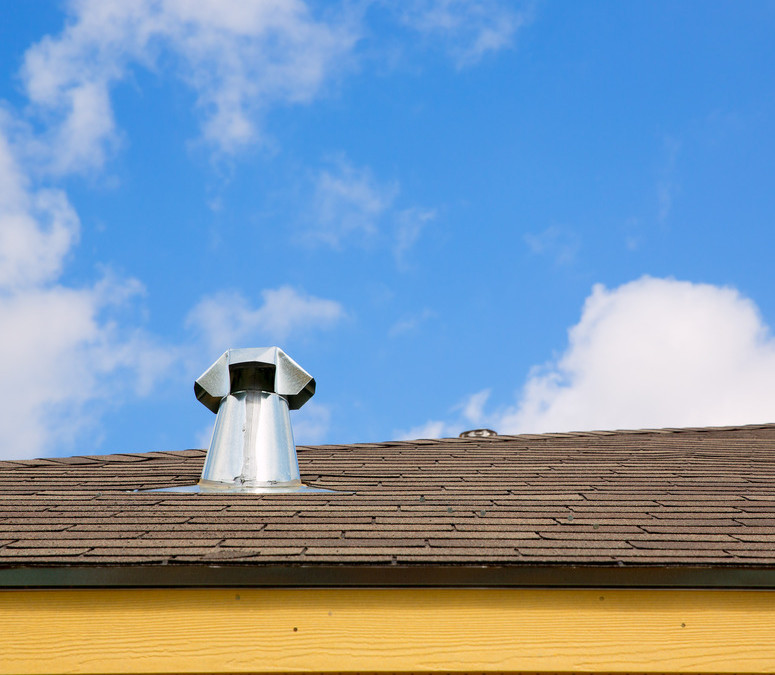
Solar Tubes Beat Traditional Skylights for Low-Cost Daylighting

Solar Tubes Beat Traditional Skylights for Low-Cost Daylighting

By installing solar tubes, you’ll get the natural light that skylights provide — but with less cost and less hassle.

If you’ve been thinking of adding more daylight to a kitchen or dark hallway, a solar tube may be the way to go. At a fraction of the cost of a skylight, a solar tube provides plenty of warm, indirect light.

How It Works

Known variously as a sun tube, sun tunnel, light tube, or tubular skylight, a solar tube is a 10- or 14-inch-diameter sheet-metal tube with a polished interior. The interior acts like a continuous mirror, channeling light along its entire length while preserving the light’s intensity. It captures daylight at the roof and delivers it inside your home.

On your roof, a solar tube is capped by a weather-proof plastic globe. The tube ends in a porthole-like diffuser in the ceiling of a room below. The globe gathers light from outside; the diffuser spreads the light in a pure white glow. The effect is dramatic: New installations often have homeowners reaching for the light switch as they leave a room.

Cost

A light tube costs about $500 to $1,000 when professionally installed, compared with more than $2,000 for a skylight. If you’re reasonably handy and comfortable working on a roof, install a light tube yourself using a kit that costs about $200 to $400. Unlike a skylight, a light tube doesn’t require new drywall, paint, and alterations to framing members.

How Much Light?

A 10-inch tube, the smallest option, is the equivalent of three 100-watt bulbs, enough to illuminate up to 200 square feet of floor area; 14-inch tubes can brighten as much as 300 square feet.

Popular locations for a light tube include any areas where constant indirect light is handy:

  • Hallways
  • Stairways
  • Walk-in closets
  • Kitchens
  • Bathrooms
  • Laundry rooms

The only place you don’t want a light tube is above a TV or computer screen where it might create uncomfortable glare.

Bringing a Light Tube Through Multiple Levels

Channeling light down to the first floor of a two-story house is feasible if you have a closet or mechanical chase through which you can run the tube. The job can quickly become more complicated if there’s flooring to cut through, or if you encounter wiring, plumbing, and HVAC ducts.

Is Your House Right for a Light Tube?

Because installation requires no framing alteration, there are few limitations to where you can locate a light tube. Check the attic space above to see if there is room for a straight run. If you find an obstruction, elbows or flexible tubing may get around it. It’s relatively easy to install a light tube in a vaulted ceiling because only a foot or so of tubing is required.

Make these evaluations in advance:

  • Roof slope: Most light tube kits include flashing that can be installed on roofs with slopes between 15 degrees (a 3-in-12 pitch) and 60 degrees (a 20-in-12 pitch).
  • Roofing material: Kits are designed with asphalt shingles in mind, but also work with wood shingles or shakes. Flashing adapters for metal or tile roofs are available.
  • Roof framing spacing: Standard rafters are spaced 16 inches on-center; gap enough for 10- or 14-inch tubes. If your home has rafters positioned 24 inches on-center, you can special order a 21-inch tube for light coverage up to 600 square feet.
  • Location: A globe mounted on a southwest roof gives the best results. Choose a spot requiring a run of tubing that’s 14 feet or less. A globe positioned directly above your target room can convey as much as 98% of exterior light. A tube that twists and turns minimally reduces the light.
  • Weather: If you live in a locale with high humidity, condensation on the interior of the tube can be a problem. Wrapping the tube with R-15 or R-19 insulation greatly cuts condensation. Some manufacturers offer sections of tubing with small fans built in to remove moist air. If you live in a hurricane-prone area, opt for an extra-hardy polycarbonate dome.


By: Dave Toht:© Copyright 2015 NATIONAL ASSOCIATION OF REALTORS®

Choosing Light Bulbs Based on Your Fixtures

Choosing Light Bulbs Based on Your Fixtures

In the brave new world of light bulb choices, let your fixture be your guide.

Light bulb shopping used to be as simple as turning on a light switch. Today, it means weighing priorities for cost, energy efficiency, and aesthetics. Since you’re probably replacing bulbs one fixture at a time, here are some best-bet picks for each type.

Table and Floor Lamps: Halogen Incandescent

  • Light shines in all directions, providing a warm glow.
  • Dimmable.
  • Looks most similar to the traditional incandescent.
  • Uses 25% to 30% less energy than the incandescent.

Table and floor lamps look best with omnidirectional light. “You probably don’t want a big bright spot in the middle of your lampshade,” says Jeff Harris of the nonprofit think tank Alliance to Save Energy. “You’re looking for a nice, warm glow.”

Halogen incandescents provide that, and are good with dimmers. You may be able to find a dimmable CFL, but it’s common to experience humming or flickering at low light levels.

For non-dimming lamps, CFLs are great if you can find a color temperature you like.

  • Color temperature is measured on a warmness (candlelight) and coolness (blue sky) scale. LEDs, CFLs, and halogen incandescents all come in a wide range of color temperatures.
  • Buy covered globes or A-lamps — bulbs shaped like old-fashioned incandescents — rather than spirals if you can see the bulb and aren’t a fan of the spiral look.
  • Otherwise, just go with halogen incandescents and don’t sweat the fact that CFLs are more energy-efficient than halogens. Your still saving over a traditional incandescent and the glow is pretty.

So why not LEDs? LEDs point light in a single direction, although new LED-containing A-lamps are designed to compensate for that by using prisms or special coatings. But all that extra technology makes them expensive — probably not worth it for your bedside lamp, which isn’t a big energy hog anyway.

Recessed Ceiling Lights (Kitchens, Family Rooms): LEDs

  • Energy efficiency is key in high-use areas.
  • 80% energy savings over incandescents.
  • Bulb life (up to 50,000 hours) much longer than CFLs.
  • Shine light a single direction — rather than glowing.
  • Brighter than halogens or CFLs.

Overhead recessed lighting in the kitchen or family room gets lots of use, so energy efficiency is a big consideration; plus, you need bulbs that point light in a single direction so the light actually escapes the can or fixture.

LED reflector lamps, the flat-topped bulbs typically used as floodlights or spotlights, are designed to shine light in a single direction. And that means you’ll get a brighter look with less energy output than CFLs or halogens.

New conversion kits let you put LEDs into your old can fixtures designed for screw-in bulbs.

A word of caution: LEDs don’t dim well unless they’re connected to a wall dimming switch specifically designed for them. You can get LED-compatible dimmers at big-box stores starting at around $30. Same goes for CFLs.

If you do decide on CFLs or halogen incandescents for a warmer quality of light:

  • Buy reflector-lamp style bulbs, not A-lamps or globes, so the light isn’t trapped inside the can.
  • If you have multiple cans, you can probably get away with a lower-wattage halogen incandescent reflector bulb and save energy while still having plenty of light.

Bathroom Vanity Fixture: Halogen Incandescents

  • Better for showing color and texture than CFLs or LEDs.

Lighting over the bathroom vanity is a highly personal lighting choice, especially when there are women in the house. If the light isn’t flattering to your skin tone or makes it hard to apply makeup, you’ll be dissatisfied.

That’s why halogen incandescents, with their pleasing light, are a good bet.

However, if the bathroom where you primp is a high-traffic area and you’re concerned about energy use, experiment with CFLs in a warm color temperature and get a separate lighted mirror for your beauty routine.

Stairwell Light: LEDs

  • Inconvenient fixtures are a good place to use long-lasting LEDs.

How many times are you willing to drag out a ladder and change the bulb in a tough-to-reach fixture? Take advantage of LEDs’ long life by putting them in spots you don’t want to revisit often:

  • Fixtures hanging in stairwells
  • Track lighting suspended from a cathedral ceiling
  • Cabinets
  • Ledges
  • Tray ceilings
  • Recessed areas

Outdoor Floodlight: Halogen Incandescent

  • For security and efficiency, use fixtures with daylight/occupancy sensors.
  • Since outdoor lights aren’t used often, not worth investing in LEDs.
  • CFLs don’t come on easily in cold weather.
  • CFLs don’t last as long as advertised when turned on and off frequently.

If you don’t want to get new fixtures with sensors, you can buy a sensor attachment that screws into each socket.

Rarely Used Fixtures: Low-Cost Bulbs

  • Opt for what’s easy on your wallet.
  • Use the most energy-efficient bulbs, such as LEDs, in most-used fixtures.

If the total yearly hours for the fixtures in your closets, dining room chandeliers, and the naked bulb in your attic are low, go cheap.


By: Karin Beuerlein:© Copyright 2015 NATIONAL ASSOCIATION OF REALTORS®


The owner of this website has made a commitment to accessibility and inclusion, please report any problems that you encounter using the contact form on this website. This site uses the WP ADA Compliance Check plugin to enhance accessibility.