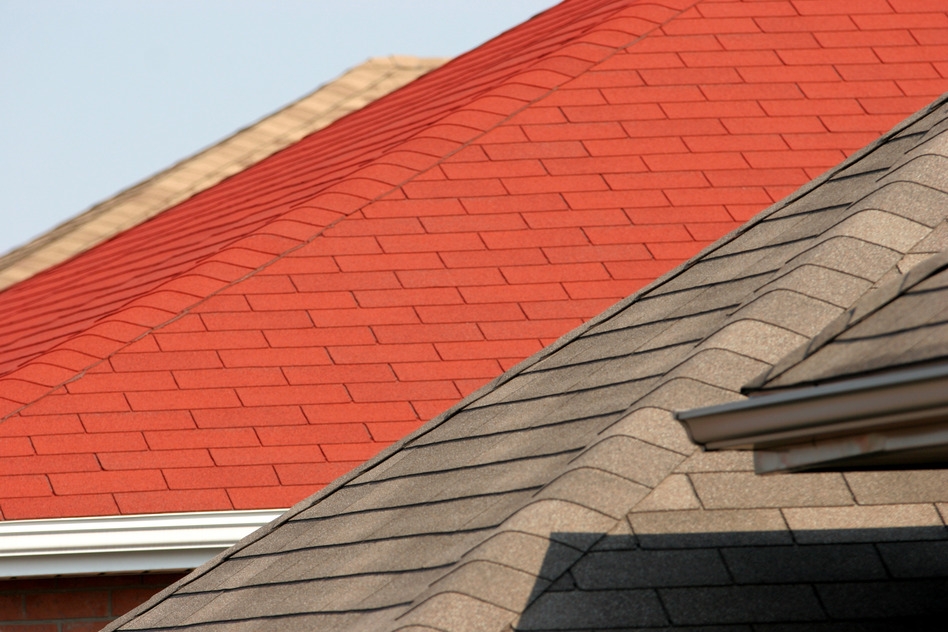
Tips to Make Your Roof Last as Long as Possible

Tips to Make Your Roof Last as Long as Possible

A new roof is an expensive proposition — $18,800 on average for composition shingles, according to Remodeling magazine’s Cost Vs. Value Report, and as much as $36,000 for high-end materials. Once you’ve made that kind of investment, you’ll want to protect it.

And even if your roof is years old, maintaining it in good shape will prolong its life and keep you from having to replace it prematurely. Here’s what you need to do to get the most from your roof.

Clean the Gutters

Ruined paint on siding and a wet basement are typical problems caused by clogged gutters, but it might surprise you to learn that the overflow can also go upward. When leaves pile too deeply in gutters, water can wick into roof sheathing and rot it, or even rot roof rafters.

Fixing that kind of damage could run into the thousands of dollars, but you can avoid it by cleaning your gutters each fall and spring. Do it yourself in a few hours if you’re comfortable working on a ladder, or hire a pro for $50-$250, depending on house size.

Related: Fast Fixes for Common Gutter Problems

Remove Leaves

If you have a simple peaked roof surrounded by low landscaping, your roof probably stays clear of leaves on its own. But if the roof is more complicated or if towering trees are nearby, piles of leaves probably collect in roof valleys or near chimneys. If you don’t remove them, they will trap moisture and gradually decompose, allowing moisture to accumulate in your roof — or worse, create fertile ground for weeds to grow.

If you have a low-slope roof and a one-story house, you may be able to pull the leaves down with a soft car-washing brush on a telescoping pole. Or you can use a specialty tool like a roof leaf rake, which costs about $20. A leaf blower gets the job done too, especially on dry leaves, but you or a pro needs to go up on the roof to use it.

If leaves are too wet or too deep, you might need to wash them off with a garden hose. Don’t use a pressure washer, which can force water up under the shingles.

Get Rid of Moss

In much of the country, composition roofs often become covered with black algae. Although unsightly, this filmy growth doesn’t hurt the roof. A little chlorine bleach or detergent mixed with water will kill it, but it’s safer for both you and the roof to just leave it alone.

If you live in the Northwest, you’re likely to find moss growing on your roof, particularly on wood or composition shingles. Moss, which looks more three-dimensional than algae, needs to go because it traps water. If you tackle it early enough, you can just sweep it off.

If there’s a lot of buildup, you may need to kill the moss first. The Washington Toxics Coalition recommends using products based on potassium salts of fatty acids rather than more toxic formulas with zinc sulfate. Even so, apply the soap only where moss is growing, and try to keep the wash water from getting into storm drains.

Once the roof is clean and free of moss, consider investing in zinc strips to keep it from coming back. For about $300, a roofer will install strips near the top of the roof. When it rains, the runoff from the strips inhibits the growth of moss. It’s effective and more environmentally friendly than treating the entire roof with pesticide, as long as you don’t live near a stream or a lake where the runoff can harm aquatic life.

Trim Overhanging Branches

A little prevention in the form of tree-trimming goes a long way toward keeping leaves and moss off your roof and keeping your roof damage-free. Abrasion from limbs and leaves that touch your roof can eventually damage shingles, especially in high winds.

Overhanging branches also give squirrels and other rodents access to your roof. They can gnaw on your roof and siding. Branches need to be 10 feet away from your roof to keep these pests at bay. If that’s not possible, wrap the tree trunk with a sheet-metal bank to prevent them from climbing the tree.

Trimming branches that hang over the roof is a job for a pro, though, or you might cause more damage than you prevent.

Related: The Best Trees for Your Yard

Prevent Ice Dams

If you’re plagued by ice buildup on the roof, removing some or all of the snow between storms might forestall leaks into your house. Don’t try to pry off ice that’s already formed, since that could damage the roof. Use a roof rake to dislodge snow within three or four feet of the gutters. Get a telescoping pole and work from the ground, if possible. If you must be on a ladder, work at an angle so the falling snow doesn’t push you over.

Inadequate insulation and air leaks into your attic greatly increase the risk of ice dams, so once the storms pass, address those problems, too.

Related: Tips on Preventing Ice Dams

Look and Listen

After every big wind or hail storm, or if you’ve heard scurrying on the roof at night, give your roof a quick check to make sure everything’s still intact.

Look for:

    • Curling, loose, or missing shingles
  • Damaged flashing around vents, chimneys, skylights, and other openings

If anything seems amiss, ask a roofer to inspect ASAP. Most problems are fairly easy to fix, but if you put them off and water gets in, the damage and costs escalate.

TIP: You don’t have to climb a ladder to inspect your roof. You can use binoculars.

Related: How Much Value Does Good Maintenance Add to Your Home’s Value


By: Jeanne Huber© Copyright 2015 NATIONAL ASSOCIATION OF REALTORS®


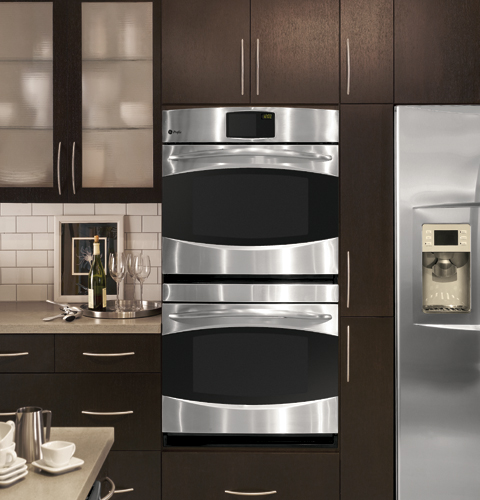
How to Buy a Wall Oven

How to Buy a Wall Oven

First Things First: Gas or Electric?

Typically, the type of power you use in your home determines whether you go with a gas or electric wall oven. If you can go either way, budget and cooking preferences will drive your final decision. Here’s more to chew on:

  • Electric wall ovens heat foods more evenly than gas and are considered easier to clean, according to Consumer Reports.
  • There’s a much larger selection of electric units than gas to choose from.
  • Budget and standard ovens that run on gas generally cost $100 or more than their electric counterparts.

Types of Wall Ovens and Costs

Here’s a breakdown of models and standard features. All are usually available in a black, white, or stainless steel finish.

1.  Conventional electric

Budget wall ovens are the least expensive available, with a price range of $700 to $1,000.  Either dials or electronic touch pads control oven settings and cooking temperatures. Stainless models usually cost $100 more than black or white units.

Standard wall ovens come with self-cleaning features which add $200 to $300 to their price tag ($1,000 to $1,300). Most have electronic touch pads for oven settings and cooking temperatures.

Double ovens come with self-cleaning features and electronic touch pads for oven settings and cooking temperatures. They cost $1,500 to $2,100.

Single ovens with microwave have one built-in oven and one built-in microwave. They come with a steep price tag ($2,100 to $2,500). Most have self-cleaning features and are equipped with electronic touch pads for oven and microwave settings.

2.  Electric convection

Standard convection wall ovens use fans to distribute heat, which speeds up baking and roasting times. Most models come with self-cleaning features. On average, they cost $300 more than standard electric wall ovens without the convection feature. All have electronic or digital controls for oven settings and cooking temperatures. Cost: $1,400 to $2,100.

Double convection wall ovens come with self-cleaning features. The most expensive units ($2,150 to $3,700) are Wi-Fi enabled so you can control temperature and cooking times via a smartphone or mobile device.  All have electronic or digital controls for oven settings and cooking temperatures.

Single convection oven and microwave combinations come with one oven and one microwave. They typically have a steep price tag: $2,500 or more. Most combo ovens have self-cleaning features and electronic or digital controls for oven and microwave settings.

3.  Gas ovens

Budget gas wall ovens are the least-expensive, with prices ranging from $800 to $1,100.  They come with either dials or electronic touch pad controls for oven settings and cooking temperatures. Stainless units start at $1,000.

Standard gas wall ovens come with self-cleaning features and a lower broiler, which add $400 to $500 to their price tag. Most have electronic touch pad controls for oven settings and cooking temperatures. Cost: $1,300 to $1,500.

Convection gas wall ovens do exist. But consumer models are almost as rare as dodo birds since you won’t find them at most big box stores. Fans of these ovens appreciate the moist heat gas generates (a byproduct of gas combustion is water vapor). Luxury appliance retailers typically sell pro-styled gas convection wall ovens.  Units start at $3,500.

Size Does Matter

Wall units offer plenty of flexibility when it comes to kitchen placement. They can be installed at any convenient height, putting an end to the bending and stooping that comes with a conventional kitchen range.

Wall ovens are available in widths of 24, 27, and 30 inches. Keep in mind some styles may skew an inch or two bigger or smaller; check oven specs before you buy.

You’ll also need to make sure your oven’s interior space is big enough for your cooking needs:

  • 2 to 3 cubic feet will accommodate households with one or two people.
  • 3 to 4 cubic feet will accommodate households with three or four people.
  • 4 cubic feet and up and more will accommodate households of four or more.

Features, Functions, and Extras That Have the Biggest Payback

We think the features that pack the most value will boost convenience and ease of use. Here’s a list of tasty picks:

Control lockout prevents little hands from playing with the oven by disabling the control panel.

Double ovens are a win-win for hardworking kitchens. They let you simultaneously bake and roast multiple items at different temperatures.

Electronic controls are featured on most wall ovens (except a few budget models and lower-priced double ovens). Unlike old school oven dials, electronic controls allow you to set precise cooking temperatures.

A self-cleaning cycle makes cleaning your oven less of a chore.

Removable oven doors allow quick and easy cleaning and wiping.

Sabbath mode settings allow observant Jews to preprogram oven settings during the Sabbath so they can heat foods. If you’re not in the know, the Sabbath is a day of rest and using modern appliances during this time is forbidden.

Features You Shouldn’t Pay More For

Warming drawers keep prepared foods warm prior to mealtime, but they’re sold as separate units and come with a chilly price tag: $1,000 and up.

Delayed-start and other Wi-Fi features allow you to control your oven when you’re not home. However, the National Fire Protection Association says you should never operate your oven when you’re not home to check on it.


By: Deirdre Sullivan:© Copyright 2015 NATIONAL ASSOCIATION OF REALTORS®


Cleaning Your Kitchen Appliances the Easy Way

Cleaning Your Kitchen Appliances the Easy Way

Your Refrigerator

The space behind your refrigerator is arguably the dirtiest couple of square feet in your house. It’s a meeting place for dust, gunk, and a host of other stuff that’s fallen behind the big guy.

To clean, pull out the refrigerator and mop up whatever you find. Then, vacuum refrigerator coils behind or beneath your fridge, which will put less stress on the fridge’s motor and prolong its life.

Replace loose door gaskets — check your owner’s manual for replacement part numbers and find new gaskets at home improvement centers or by searching online. You’ll get the added benefit of saving energy with a tighter seal. Monthly, wipe gaskets down with warm, soapy water; rinse and dry.

A little soapy water or a 50-50 solution of water and white vinegar will clean and shine the inside and outside of your fridge. Wipe down shelves and crispers weekly, or whenever you spot a spill. Remove fingerprints on stainless steel exteriors with a damp cloth.

Your Stovetop and Oven

Most ovens have self-cleaning options. We heartily recommend letting the oven do the work for you. But there are a few spots the self-clean option doesn’t reach, such as the gunk around door hinges and frames, and the crumb-catching space between double ovens. You can wipe them up with vinegar or soapy water.

Baked on crud comes off with a little baking soda on a sponge, or a spritz of commercial oven cleaner. (Make sure you open a window before your spray, so you don’t choke on fumes.) Make a habit of wiping spills quickly after using the oven, and you may never have to scrub it again.

To clean your stovetop:

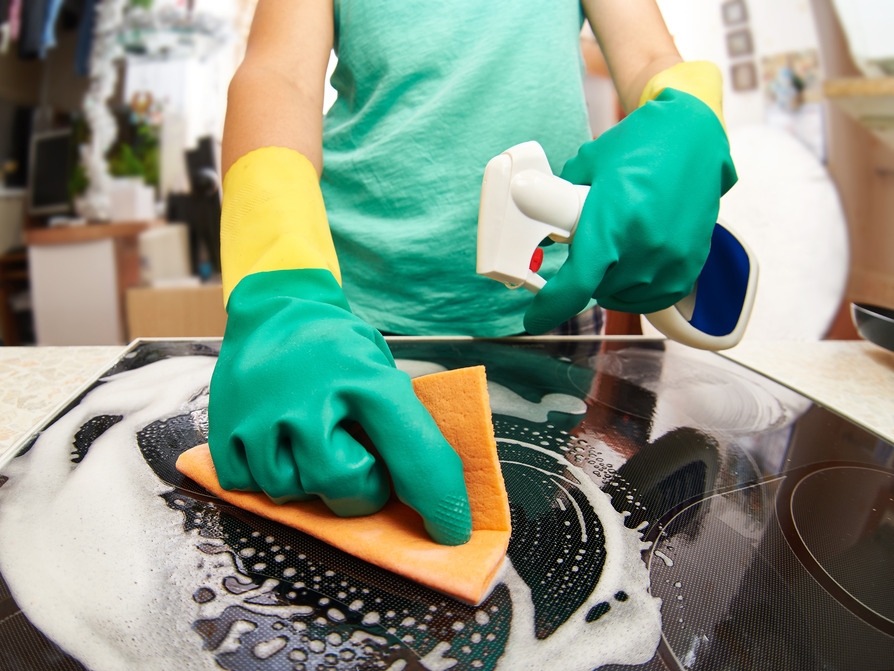
  • Fill your sink with hot, soapy water; soak burners, knobs, and hood vents (if they fit) for a couple of hours; then scrub. Repeat if necessary.
  • Replace stained metal drip plates if they’re beyond the help of steel wool.
  • Vacuum crumbs that have fallen in cracks between the stovetop and counter. Use the sofa attachment on your vacuum to get into those cracks.

Your Dishwasher

You’d think you wouldn’t need to clean your dishwasher because it cleans itself every time you use it. But you should check the drain in the bottom of the machine for debris, and wipe the gaskets around the door to ensure a tight seal.

Once each week, deodorize it by placing a bowl of white vinegar on the top rack and running it, empty, for a full cycle.

Your Microwave

The best way to remove baked-on food is to fill a microwave-safe container with water, microwave it until the water boils, and let it sit for a few minutes while steam loosens any gunk. Wipe clean.

Your Toaster

Unplug your toaster, pull out and wash its crumb catcher, and shake the machine over the sink to get rid of food. Dry thoroughly before plugging back in.

Your Coffee Machine

To remove mineral deposits that can clog your machine, pour a solution of two parts water and one part white vinegar into the water chamber, insert a coffee filter, and run the solution through the machine. Then run clear water through twice to remove the vinegary taste.

One old-timey way to remove stains from your glass coffee pot — or any vase, pitcher, etc., with stains — is to cover the bottom with table salt, add ice cubes, and, when they start to melt, swish around for a couple of minutes. Then rinse.


By: Lisa Kaplan Gordon:© Copyright 2015 NATIONAL ASSOCIATION OF REALTORS®


Top 10 Common Repair Costs

Top 10 Common Repair Costs

The good news is that most repairs are simple, inexpensive, and DIY-friendly. If you can fix stuff yourself, you’ll only pay for the cost of materials and save a bundle on these common repairs and replacements.

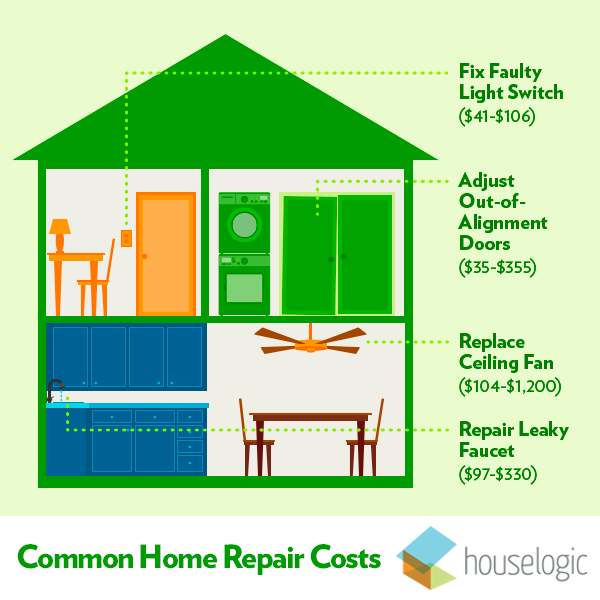
Common home repair costs infographic

1.  Replace Toilet Fill Valves

That annoying sound of water continually filling and draining from your toilet tank is often caused by leaky fill valve, which a plumber can replace, stopping water waste and restoring quiet. Plumber rates vary widely around the country, from $45 to $150 per hour, and the job will take about two hours — the minimum some plumbers require just to take the job.

Labor: $50 to $200

Materials: $11 to $23

Total: $61 to $223

Related: Home Maintenance 101: 7 Things Every Homeowner Should Know

2.  Repair a Leaky Faucet

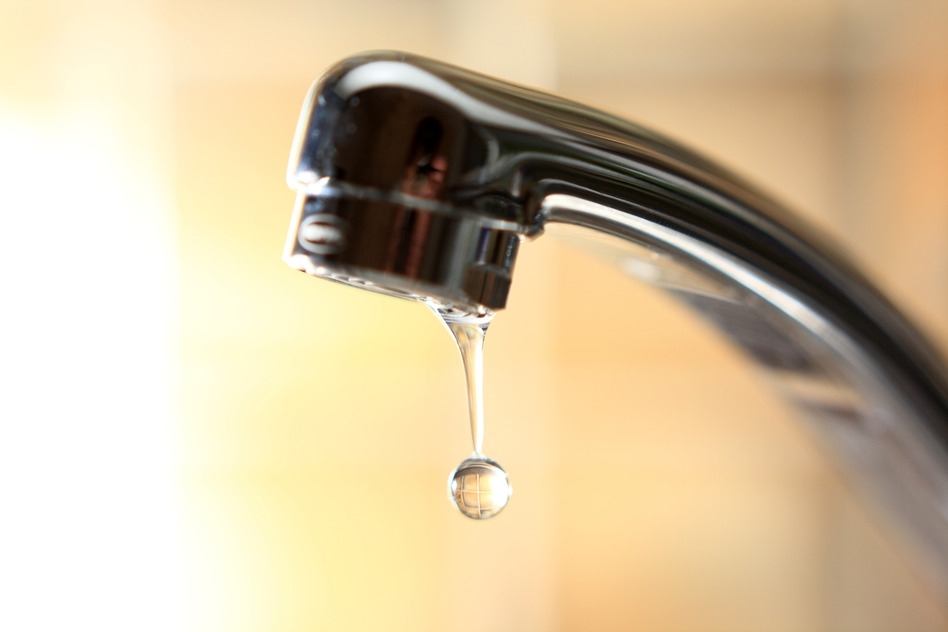
The water torture drip-drip-drip from a leaky faucet won’t just drive you insane, it can drive up water bills, too. Depending on the type of faucet you have, fixes typically involve replacing damaged rubber washers (10 for $2), O-rings (10 for $2), or a faucet cartridge ($8 to $30).

Labor: $95 to $300

Materials: $2 to $30

Total: $97 to $330

Related: The WaterSense Label: What to Look For

3.  Replace Ceiling Fan

If you’ve got a ceiling fan, sooner or later the motor will burn out, the blades will warp, and fashions will change, so you’ll need to replace it. Replacing isn’t a big deal, because upgraded wiring, a reinforced ceiling box, and a light switch with ceiling fan controls are already in place. What you’re paying for is an electrician’s time — one or two hours — and a new fixture.

Labor: $50 to $200

Materials: $54 to $1,000 and up

Total: $104 to $1,200

Related: Ceiling Fans: Know the Spin Before You Install

4.  Repair Drywall

Nicks, gashes, and smashes inevitably mar your beautiful walls. You’ll have to patch and paint to make them look as good as new. A painter can do both jobs and will probably give you a flat rate that will include patching or filling blemishes, then sanding, priming, and painting.

Painters charge $25 to $62 per hour for labor or $2.68 to $4.60 per square foot including materials. Figure it will take about three hours to repair a wall, including drying time for the patching compound and paint. It’s a good idea to save up painting chores so you have enough to keep a painter busy while repairs cure.

Materials include paint at $12 to $50 or more a gallon, which should cover about 350 square feet; plus another $10 to $50 for brushes, rollers, drop clothes, and drywall patching compound.

Labor: $75 to $186

Materials: $22 to $100

Total: $97 to $286

Related: Patch a Drywall Hole

5.  Repair Cracked Tile

Tile is hard and durable, but drop something heavy on it and it’s likely to crack — a reason to always order more tile than you need so you’ll always have spares. To replace cracked tiles, a handyman must pry out the damaged tiles, scrape away old fixative, re-glue new tiles, and spread new grout. Replacing a 2-foot-by-2-foot section of tile should take one to two hours, not including the drying time required for the adhesive to set.

Labor: $30 to $125 per hour; with possible $150 to $350 minimum charge for a handyman

Materials: $1 to $20 per square foot

Total: $34 to $430

Related: Smart Tips for Choosing Bathroom Flooring

6.  Replace Caulk Around Tubs, Sinks, and Showers

Caulk is the waterproof seal around sinks, tubs, and showers that prevents moisture from seeping through gaps and onto drywall and flooring. When caulk cracks or peels, it should be replaced immediately to prevent mold and rot.

A handyman can dig out old caulk around a tub and reseal with new in about an hour.

Labor: $30 to $125 per hour; with possible $150 to $350 minimum charge for a handyman

Materials:  $1 to $4 for a tube of bathroom caulk

Total: $31 to $354

Related: How to Remove Caulk

7.  Fix Gutters

Gutters and downspouts carry water from rain and snow away from your house and onto the ground. Sometimes the weight of wet snow and soggy leaves puts too much pressure on gutters, causing them to pull away from the house or pitch at inefficient angles.

A gutter contractor will clean gutters, and replace or reinstall supportive hardware and hangers. To restore the correct pitch, the contractor must detach and reattach each gutter section.

Labor: $127 to $282 (depending on length of gutter)

Materials: $10 for five hangers; $6 to $9 for gutter sealant

Total: $143 to $301

Related: How to Unclog a Gutter

8.  Fix Out-of-Alignment Doors

Over time, your house moves as its foundation settles and building materials expand and contract with changes in humidity. The movement often is noticed when doorframes shift slightly, causing hinges to creak and doors to not shut properly.

Adding wooden shims to frames and hinges can bring doors back into alignment and let them easily open and close once again. Replacing worn-out screws with longer screws helps secure hinges tightly.

A handyman can fix a door in about an hour. Materials will include shims and screws.

Labor: $30 to $125 per hour; with possible $150 to $350 minimum charge for a handyman

Materials: $5

Total: $35 to $355

Related: Cool Improvements: Replacing Your Interior Doors

9.  Repair Ice Damming

If your house isn’t insulated correctly or your roof isn’t designed correctly, melting roof snow can run off and freeze around roof edges. Eventually, this can form an ice dam that creeps up your roof, damaging shingles and forcing melting water into your home.

One popular solution to ice damming is to install a heating cable along the roof’s edge, which warms the area and prevents freezing. It’s not a DIY job. Roofing contractors will install the cable, and an electrician will install outlets that will juice up the cable. If you want a thermostat to turn the cable on and off automatically, that’ll be extra, too.

Labor and materials: $30 to $60 per linear foot

Total: $371 to $1,319 (average job cost)

Related: How to Prevent Ice Dams

10.  Fix a Faulty Light Switch

Sometimes you turn on the light but nothing happens; or sparks crackle, and the light turns on. It’s disconcerting, but most likely it’s an easy fix. An electrician will turn off the power, take off the faceplate, check and perhaps tighten wires; or replace the switch. All told, it will take less than an hour.

Labor: $50 to $100 per hour

Materials: $1 to $6 for a single pole light switch

Total: $41 to $106

Related: How to Repair a Light Switch

By: Lisa Kaplan Gordon:© Copyright 2015 NATIONAL ASSOCIATION OF REALTORS®

Your Guide to Choosing Patio Stones

Your Guide to Choosing Patio Stones

Published: April 9, 2013

Brick

Brick pavers are classic. They’ve got lots of character, and you can explore your creative chops by setting them in intricate patterns. Thinner than typical “builder bricks” used on home siding, they’re made to hold up under heavy foot traffic.

Brick pavers come in a variety of shapes, sizes, colors, and finishes, and can look old or new. Because they’re smaller than other pavers, they take a while to put in place, and installation costs can be higher.

You can do the job yourself for $3 to $5 per square foot. You’ll need to rent a brick saw — a heavy table-mounted saw that makes cutting masonry a snap. Cost: $60 to $95 per day. Don’t forget: You’ll need to figure out a way to get the brick saw to your house.

For a pro-installed brick patio, you’ll pay $12 to $18 per square foot, professionally installed.

Concrete
Concrete Pavers
Rubber Tiles
Flagstone, Slate, and Marble
Decomposed Granite and Pebble Surfaces
Finding Your Own Recycled Materials
Mixing Materials
Getting on Base

Concrete

Concrete can be finished off in lots of imaginative ways — brushed, acid washed, scored, and stamped — and lots of colors. Its long lifespan and relatively inexpensive installation make it a popular choice.

“For colder climates, consider adding $1 to $2 per square foot for a specialized base preparation and concrete additive,” says Chris Fenmore, principal with Garden Studio Landscape Design.

Stamped concrete can simulate flagstone, brick, cobbles, and other decorative patterns, but adds about $3 per square foot to installation costs.

Figure $6 to 12 per square foot, depending on finish and color.

Brick
Concrete Pavers
Rubber Tiles
Flagstone, Slate, and Marble
Decomposed Granite and Pebble Surfaces
Finding Your Own Recycled Materials
Mixing Materials
Getting on Base

Concrete Pavers

Concrete pavers offer an embarrassment of riches — there are shapes, sizes, textures, and colors galore. Some are plain; some look like real stone; others have intricate patterns embossed on their surfaces. They’re readily available at home improvement centers and are well-suited to DIY patio projects.

Interlocking concrete pavers have tabs and slots so they fit together like pieces of a very simple puzzle. They’re fairly inexpensive, have minimal maintenance, and install quickly.

Concrete pavers are $2 to $8 per square foot. If you’d rather have a pro do it, you’ll pay $7 to $15 per square foot, including materials.

Brick
Concrete
Rubber Tiles
Flagstone, Slate, and Marble
Decomposed Granite and Pebble Surfaces
Finding Your Own Recycled Materials
Mixing Materials
Getting on Base

Rubber Tiles

Rubber tiles are made from recycled tires. They’re designed to go over any surface, and their light weight means you can use them on decks. They look like concrete tiles, with finishes that resemble brick and terra cotta. They’re fairly new on the market, so the jury is still out on how they perform over time.

Rubber tiles are strictly a DIY material, and they snap together with connector clips. They’re good for quickly covering up old, cracked, worn patio surfaces. You’ll pay $3 to $5 per square foot.

Brick
Concrete
Concrete Pavers
Flagstone, Slate, and Marble
Decomposed Granite and Pebble Surfaces
Finding Your Own Recycled Materials
Mixing Materials
Getting on Base

Flagstone, Slate, and Marble

Almost any stone can work as a paver, but most are either sandstone, limestone, slate, or granite. The materials you select will be especially cost-efficient if they come from locally operated quarries; check your local stone supplier before looking at national home improvement chains.

Stone pavers are cut into modular shapes; 6-by-12, 12-by-12, and 18-by-18-inch sizes are standard. Uncut pavers have rough, irregular edges and come in various sizes.

When it comes to installing uncut stone, an experienced pro works quickly and is your best bet for a good-looking patio with even spaces between stones.

Pro installation is $12 to $28 per square foot, depending on the stone you choose.

Want to see some stone patios that really rock?

Brick
Concrete
Concrete Pavers
Rubber Tiles
Decomposed Granite and Pebble Surfaces
Finding Your Own Recycled Materials
Mixing Materials
Getting on Base

Decomposed Granite and Pebble Surfaces

Decomposed granite is made up of very small pieces of granite, ranging in size from 1/4-inch to the size of sand. It’s an affordable way to go, and some folks really love the slightly crunchy texture underfoot, and the way rain disappears — no puddles!

You’ll probably have to refresh and replenish the granite now and then, as the surface can erode with time, so there’s some preventative maintenance involved. Figure about $1 per square foot every three years for upkeep.

Also, decomposed granite isn’t solid and furniture legs tend to sink into the stones. Adding stabilizers that help bind particles together can strengthen the surface.

Cost: $1.50 per square foot without stabilizers, $2 with stabilizers.

Brick
Concrete
Concrete Pavers
Rubber Tiles
Flagstone, Slate, and Marble
Finding Your Own Recycled Materials
Mixing Materials
Getting on Base

Finding Your Own Recycled Materials

Like the idea of upcycling? A patio is a good way to reuse old building materials, and it’s a cost-effective and eco-friendly alternative to new materials. Plus, you’ll be building a one-of-a-kind creation. Tip: Look for materials that provide uniform thickness.

  • Cast-off concrete sections from a neighbor’s old driveway or sidewalk.
  • Check nearby construction sites for old materials — be sure to ask permission before hauling anything away.
  • Know of a building scheduled for demolition? See if there’s any old brick or stone is going to be discarded.

Although the materials are usually free, it’s a good idea to enlist some strong-backed helpers and the use of a pick-up truck. For a typical 12-by-12-foot patio, you’ll save $500 to $800 versus new pavers. Spend some of that on a patio party for your helpers.

(If you’re a salvaged materials aficionado, check out our slideshow on clever ways to use salvage in your home.)

Brick
Concrete
Concrete Pavers
Rubber Tiles
Flagstone, Slate, and Marble
Decomposed Granite and Pebble Surfaces
Mixing Materials
Getting on Base

Mixing Materials

Remember, you’re not stuck with one type of patio paver. Combining different materials — such as brick together with concrete, or stone with rock trim, can create a cool, customized look.

Southern California designer Chris Fenmore notes, “Too much hardscape can be tedious. I often like to use four-inch troughs separating masonry from concrete that can be filled with gravel, beach rocks, or ground cover. They provide a bit of relief from the hardscape and nice detail, adding to the custom look of the yard.”

Brick
Concrete
Concrete Pavers
Rubber Tiles
Flagstone, Slate, and Marble
Decomposed Granite and Pebble Surfaces
Finding Your Own Recycled Materials
Getting on Base

Getting on Base

Choosing paving materials begins with a basic: the base or foundation. The base supports your pavers, and it’s got to be firm, strong, and designed to stand up to years of wear and weather. A poorly installed base leads to shifting and settling that’ll crack concrete and make your patio pavers look like choppy seas.

A sand-and-gravel base is a good DIY project; leave a concrete slab base to the pros.

A gravel and sand base is a simple foundation that lets you “dry set” pavers — you put the pavers on top of the base, then sweep fine sand into the joints to hold them there. Building a gravel-and-sand base is an easy (but time-consuming) DIY project. You’ll pay $2 to $3 per square foot for a DIY job. If you’d rather have a pro do the work, figure $3 to $5 per square foot.

With a sand or gravel base, chances are there’ll be some settling over time. Every couple of years, plan on resetting individual pavers that have gotten out of whack because of settling.

A concrete base offers greater longevity and stability, with less potential for settling. On a concrete slab base, the paving materials are set permanently with mortar, and ongoing maintenance is minimal.

Working with concrete is a challenge for weekend warriors, so skip experimentation (mistakes in concrete are permanent) and go with a pro. You’ll pay $5 to $8 per square foot for a professionally installed concrete base.

If you’re a fan of concrete, check out these imaginative ways to use concrete inside your house.

Brick
Concrete
Concrete Pavers
Rubber Tiles
Flagstone, Slate, and Marble
Decomposed Granite and Pebble Surfaces
Finding Your Own Recycled Materials
Mixing Materials


By: Andrea Nordstrom Caughey:© Copyright 2015 NATIONAL ASSOCIATION O FREALTORS®

The owner of this website has made a commitment to accessibility and inclusion, please report any problems that you encounter using the contact form on this website. This site uses the WP ADA Compliance Check plugin to enhance accessibility.