
When is Foreclosure Removed from Your Credit Report?

When is Foreclosure Removed from Your Credit Report?

Use this handy guide to figure out how quickly you can buy a home after a major financial setback when applying for a loan through FHA, Fannie Mae, or Freddie Mac.

Foreclosures, deeds in lieu, short sales, bankruptcies — they can damage your credit for a long time. But by following guidelines from the FHA, Fannie Mae, or Freddie Mac, you can become a home owner again if you work to rebuild your credit and have a little patience.

Government entities set guidelines for credit events

The chart below outlines the criteria that government entities FHA, Fannie Mae, and Freddie Mac follow for major credit-busting events, including foreclosure. Although FHA, Fannie Mae, and Freddie Mac aren’t direct lenders, they wield a lot of behind-the-scenes influence by working with banks to guarantee loans and help lenders free up capital to provide more mortgages.

One of these entities may have made your loan possible without you even knowing it. Although for the most part banks make loans to whomever they want, they’ll likely find themselves following FHA, Fannie Mae, or Freddie Mac guidelines at a minimum in order to keep working with these useful partners.

Some lenders may have more stringent policies and others, willing to take greater risks, may work outside these entities and offer more liberal lending policies.

How to read the chart

This chart offers summaries of what can be complex rules and regulations. So:

1. Look to professionals, such as a bankruptcy lawyer and a CPA specializing in bankruptcy provisions, before making major financial decisions.

2. For HUD-approved counselors, go to http://www.hud.gov/offices/hsg/sfh/hcc/fc/index.cfm. You can also call 1-888-995-HOPE for help from the Homeownership Preservation Foundation.

3. Understand what “extenuating circumstances” means in each case:

FHA: An event that was out of the borrower’s control that made a significant impact on the borrower’s finances and led to bankruptcy or foreclosure.

Fannie Mae: A nonrecurring event that’s beyond the borrower’s control that results in a sudden, significant, and prolonged reduction in income or a catastrophic increase in financial obligations.

Freddie Mac: A nonrecurring or isolated circumstance, or set of circumstances, that was beyond the borrower’s control and that significantly reduced income and/or increased expenses and rendered the borrower unable to repay obligations as agreed, resulting in significant adverse or derogatory credit information.

FHA Fannie Mae Freddie Mac
Foreclosure •3-year wait. •7-year wait from the completed foreclosure sale date.
•3-year wait if borrower can show extenuating circumstances (additional underwriting requirements apply for 4 years after 3-year waiting period).
•7-year wait for a second home, investment opportunity, or cash-out refinancing.
•5-year wait from the completed foreclosure sale date.
•3-year wait if borrower can show extenuating circumstances.
Short Sale •No wait if not in default.
•3-year wait if in default at closing of short sale.
•2-year wait if the borrower puts 20% or more down.
•4-year wait if the borrower puts 10-20% down.
•7-year wait if the borrower puts less than 10% down.
•2-year wait time if borrower can show extenuating circumstances and puts 10% or more down.
•4-year wait.
•2-year wait if borrower can show extenuating circumstances.
Deed in lieu of foreclosure •Same as FHA’s foreclosure policy. •Same as Fannie’s short sale policy. •Same as Freddie’s short sale policy.
Bankruptcy Chapter 7 (liquidation):
•2-year wait from the discharge date of the bankruptcy.
•1-2 year wait if borrower can show extenuating circumstances.

Chapter 13 (repayment plan):
•1-year wait from the discharge date of the bankruptcy.

Chapter 7 or Chapter 11 (reorganization, usually involving corporations or partnerships):
•4-year wait from the discharge or dismissal date of the bankruptcy.
•2-year wait from the discharge or dismissal date may be accepted if borrower can show extenuating circumstances.

Chapter 13:
•2-year wait from the discharge date or 4-year wait  from the dismissal date.
•2-year wait for a dismissal if borrower can show extenuating circumstances.

Multiple bankruptcies:
•5-year wait if the borrower has filed more than one bankruptcy petition in the past 7 years.
•3-year wait if borrower can show extenuating circumstances.

Chapter 7 or Chapter 11:
•Same as Fannie’s bankruptcy policy.

Chapter 13:
•2-year wait from the discharge date of the bankruptcy.
•2-year wait from the discharge or dismissal date of the bankruptcy if borrower can show extenuating circumstances.

Multiple bankruptcies:
•Same as Fannie Mae’s policy for multiple bankruptcies.

Source: FHA Handbook, Fannie Mae Selling Guide, Freddie Mac Selling Guide


Published: April 8, 2013 By: © Copyright 2015 NATIONAL ASSOCIATION OF REALTORS®

How to Replace a Light Switch

How to Replace a Light Switch

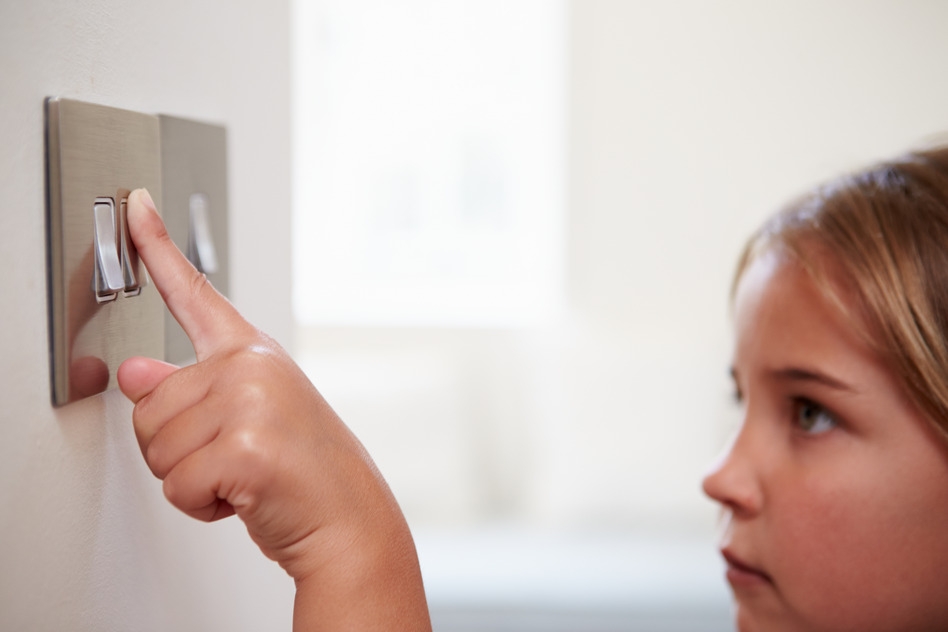
You flip a light switch and nothing happens. What gives?

If it’s not a burned-out light bulb, chances are the switch itself is faulty. The easiest and least expensive solution is to replace the switch altogether. You won’t need a $90-per-hour electrician — it’s an easy DIY job.

What Kind of Switch Do I Need?

The most common type of light switch is single-pole, which controls power to a light source simply by flipping it to the on or off position. It has two terminals: One for the incoming hot wire, the other for the outgoing. It also may have a ground wire.

  • A single-pole light switch costs less than $5 to replace. Go for a rocker switch that’s easy to use and adds sensible universal design to your home.
  • Three-way switches let you control the same light from two different locations. When you flip one switch to the on position, the other switch is simultaneously moved to the on position. A three-way switch will cost less than $5.
  • Likewise, four-way switches let you control the same light from three or more locations. Each four-way switch costs in the $10-$15 range.
  • Double-pole switches have four terminals instead of two, so they’re used for outlets and appliances that require 240-volt circuits. They also come in rockers. Each double-pole switch will cost $7-$15.

What if I Want a Dimmer?

Dimmer switches not only add instant mood lighting to a room, they save energy, too — for every 10% you lower a light bulb’s brightness, you’ll double the bulb’s life.

The only hitch: CFLs often don’t work with dimmers, so you’ll have to use LEDs or halogen incandescents in your fixtures. Dimmers come in rotary, slide, touch-activated, or digital varieties; the cheapest is rotary and will cost less than $10.

So How Do I Replace My Light Switch?

It’s easy. All you’ll need are:

  • Phillips-head screwdriver
  • Flathead screwdriver
  • Voltage tester
  • Needle-nosed pliers

Important: Before you attempt any repairs, cut power to the light switch by switching off the circuit breaker at your electrical service box.

Learn More About Lighting

  • Do You Know Which Light Bulb to Buy?
  • LEDs Aren’t Cheap: Here’s How to Get the Most for Your Money
  • It’s Not True! Incandescent Light Bulbs Aren’t Banned


By: Courtney Craig: © Copyright 2015 NATIONAL ASSOCIATION OF REALTORS®


13 Lucky Superstitions for Your Home

13 Lucky Superstitions for Your Home

Published: January 8, 2013

Is 13 an unlucky number? We don’t think so. But just to be safe, we found 13 superstitions that just might bring your home a little luck this year.

1. Never walk under a ladder. This is believed to be the devil’s territory. If there’s no way around it, protect yourself by crossing your fingers or making the fig sign with your hand — closed fist, with the thumb between your index and middle fingers.

2. When you move out of a house, leave the broom behind. Along with the dust and dirt of your old home, old brooms also carry the negative aspects of your life. A new broom signifies a fresh start in your new home.

3. Carry bread and salt with you when you first enter a new home (along with your new broom). After crossing the threshold, sprinkle salt in front of the door to keep evil spirits away.

4. It’s bad luck to carry a hoe into the house. If you do it by mistake, carry it out by walking backwards through the same door — it’ll reverse the bad luck.

5. Stuff fennel, an herb with yellow flowers and feathery leaves, into your keyhole or hang it over the door to protect your home from witches.

6. Paint your front porch blue to ward off ghosts. This superstition, which originated in Southern plantation homes, tells us that “haints,” or ghosts, can’t cross water. Painting the porch “haint blue” would confuse ghosts into thinking the porch was made of water, so they wouldn’t enter the home.

7. Never put shoes on a dresser or table. Bad luck will ensue, according to a Jewish superstition.

8. In fung shui architecture, there should be windows on a house’s east side to face the sunrise. A 27-story home in Mumbai, valued at $1 billion, currently sits empty because its owner believes the lack of windows on the east side will bring him bad luck.

9. On Chinese New Year, which will be celebrated on Feb. 10 this year, you should clean your home thoroughly to get rid of bad luck and accept new luck into your home. Also decorate your doors and windows with posters featuring the word “fu,” which means good luck and happiness.

10. According to a Norse superstition, placing an acorn on a windowsill will protect a house from being struck by lightning. Window blind pulls decorated like acorns are still popular.

11. Never open an umbrella inside. Doing so would be an insult to the sun god, as umbrellas are commonly used for protection against the sun.

12. Don’t move into a new place on a Friday, Saturday, or rainy day. These days are unlucky and may prevent you from ever truly settling into your new home. According to Indian superstition, Thursday is the luckiest day to move in.

13. Never pound a nail after sunset, or you’ll wake the tree gods. Wouldn’t want to do that.

Have any superstitions to add to the list?


By: Courtney Craig:© Copyright 2015 NATIONAL ASSOCIATION OF REALTORS®

Laundry Pods Can Poison Kids

Laundry Pods Can Poison Kids

Published: January 4, 2013

Those colorful pods of Tide are poisoning kids who eat them.

New, single-use laundry pods are cute and colorful — and all too tempting to children, who are ending up in the emergency room when they eat one like candy.

That’s why the Consumer Product Safety Commission has issued a safety alert, warning parents that children exposed to the chemicals in these pods are at risk of serious injury.

The commission is aware of 500 incidents involving children and adults injured by the liquid pods, which are made by several laundry detergent companies — not just Tide.

The pods contain concentrated toxic chemicals and dissolve quickly when exposed to wet hands or saliva. If eaten, the pods can produce vomiting, drowsiness, throat swelling, difficulty breathing and loss of consciousness.

The CPSC recommends:

  • Do not let children handle laundry pods.
  • Keep pods sealed in original packaging and locked up out of your child’s sight or reach.
  • If swallowed or exposed to the eye, immediately call Poison Help at 1-800-222-1222.


By: Lisa Kaplan Gordon © Copyright 2015 NATIONAL ASSOCIATION OF REALTORS®


Tax Credits for Storm Windows and Storm Doors

Tax Credits for Storm Windows and Storm Doors

Update: Thanks to a vigilant reader, we were alerted to a change in the federal tax credit eligibility of storm windows and doors.

According to an IRS spokesperson, although storm windows and storm doors could have qualified some years ago if they met specific U-factor and solar heat gain requirements, the law has since changed to say that windows and doors must meet Energy Star requirements. Energy Star doesn’t have standards for storm windows and doors. Therefore, those products don’t qualify for the tax credit for windows, doors, and skylights.

According to “Remodeling” magazine’s 2015 “Cost vs. Value Report,” vinyl replacement windows recoup about 73% of their cost at resale. The magazine doesn’t track storm windows.

Original:

If you installed extra protection over your windows and doors, you may be eligible for an energy tax credit.

Tax credits limits and deadlines:

  • Available only to those who didn’t take advantage of the 2009-2010 energy tax credit program.
  • For storm doors, up to a $500 credit.
  • For storm windows, up to a $200 credit.
  • Installation costs aren’t covered.
  • 10% of expenditures, up to $500 for the year, for all energy improvements combined.
  • Must have been installed by Dec. 31, 2013.
  • Save receipts and each manufacturer’s certification statement, which is used to find qualifying products.
  • File IRS Form 5695.

The Energy Star site is your safest bet for information on how to get the credit and what’s covered. 

Don’t rely solely on contractors who may not know the details or who promise their products will get the credit in order to make a sale.

Read on to learn more:

  • Storm windows: A value beyond tax breaks
  • Storm windows vs. replacement windows

Storm windows: A value beyond tax breaks

  • Much less expensive than full replacement windows and doors
  • Easier to install, while giving comparable energy savings to new windows and doors

Storm windows make the most sense if your home has single-pane windows. They’re designed to fit in existing openings, on either the inside or outside, and newer models open and close.

The insulation gain from storm windows is nearly identical to most energy-efficient, double-pane windows, says Chris Dorsi, author of The Homeowner’s Handbook to Energy Efficiency.

Storm window savings and payback

Like replacement windows, storm windows can save you about 15% to 40% on energy bills, or from $126 to $465 a year. That’s assuming a 2,000-square-foot home with single-pane windows, according to the Efficient Windows Collaborative.

If you live in a colder climate, you’ll see savings closer to the top end of the range. Since storm windows are cheaper than replacement windows but the energy savings are similar, the payback period for storm windows should be a lot shorter.

Compare storm windows with regular windows:

Window Type Cost Installation Time
Regular windows Between $500 and $1,000, installed, per tax credit-eligible replacement window 2-3 days
Storm windows Between $100 and $300, installed 1-2 days

Storm door facts:

  • Costs about $200 to $300 apiece.
  • Allows air flow between the inside and outside when the weather is nice, assuming it’s equipped with a retractable or interchangeable screen.
  • Energy saving is minimal because storm doors make up such a small percentage of a home’s total exterior compared with windows.

Storm windows vs. replacement windows


1. You get more bang for your buck with storm windows if you live in a colder climate. Keeping heat in and drafts out adds up in energy savings.

In warm climates, storm windows’ benefits are more limited unless they’re made of reflective glass that deflects the sun’s rays, says Adam Winter, co-founder of Recurve, a San Francisco company that does home energy audits and green remodeling.

2. Storm windows may not provide as much of a return at resale, says Mark Meshulam, author of the Chicago Window Expert blog:

  • Not as attractive as replacement windows.
  • Less convenient since you need to open two windows to get fresh air.
  • More prone to moisture problems.


By: Gil Rudawsky:© Copyright 2015 NATIONAL ASSOCIATION OF REALTORS®


The owner of this website has made a commitment to accessibility and inclusion, please report any problems that you encounter using the contact form on this website. This site uses the WP ADA Compliance Check plugin to enhance accessibility.