

How to Assess the Real Cost of a Fixer-Upper House

How to Assess the Real Cost of a Fixer-Upper House

When you buy a fixer-upper house, you can save a ton of money, or get yourself in a financial fix.

Trying to decide whether to buy a fixer-upper house? Follow these seven steps, and you’ll know how much you can afford, how much to offer, and whether a fixer-upper house is right for you.

1.  Decide what you can do yourself.

TV remodeling shows make home improvement work look like a snap. In the real world, attempting a difficult remodeling job that you don’t know how to do will take longer than you think and can lead to less-than-professional results that won’t increase the value of your fixer-upper house.

  • Do you really have the skills to do it? Some tasks, like stripping wallpaper and painting, are relatively easy. Others, like electrical work, can be dangerous when done by amateurs.
  • Do you really have the time and desire to do it? Can you take time off work to renovate your fixer-upper house? If not, will you be stressed out by living in a work zone for months while you complete projects on the weekends?

2.  Price the cost of repairs and remodeling before you make an offer.

  • Get your contractor into the house to do a walk-through, so he can give you a written cost estimate on the tasks he’s going to do.
  • If you’re doing the work yourself, price the supplies.
  • Either way, tack on 10% to 20% to cover unforeseen problems that often arise with a fixer-upper house.

3.  Check permit costs.

  • Ask local officials if the work you’re going to do requires a permit and how much that permit costs. Doing work without a permit may save money, but it’ll cause problems when you resell your home.
  • Decide if you want to get the permits yourself or have the contractor arrange for them. Getting permits can be time-consuming and frustrating. Inspectors may force you to do additional work, or change the way you want to do a project, before they give you the permit.
  • Factor the time and aggravation of permits into your plans.

4.  Doublecheck pricing on structural work.

If your fixer-upper home needs major structural work, hire a structural engineer for $500 to $700 to inspect the home before you put in an offer so you can be confident you’ve uncovered and conservatively budgeted for the full extent of the problems.

Get written estimates for repairs before you commit to buying a home with structural issues.

Don’t purchase a home that needs major structural work unless:

  • You’re getting it at a steep discount
  • You’re sure you’ve uncovered the extent of the problem
  • You know the problem can be fixed
  • You have a binding written estimate for the repairs

5.  Check the cost of financing.

Be sure you have enough money for a downpayment, closing costs, and repairs without draining your savings.

If you’re planning to fund the repairs with a home equity or home improvement loan:

  • Get yourself pre-approved for both loans before you make an offer.
  • Make the deal contingent on getting both the purchase money loan and the renovation money loan, so you’re not forced to close the sale when you have no loan to fix the house.
  • Consider the Federal Housing Administration’s Section 203(k) program, which is designed to help home owners who are purchasing or refinancing a home that needs rehabilitation. The program wraps the purchase/refinance and rehabilitation costs into a single mortgage. To qualify for the loan, the total value of the property must fall within the FHA mortgage limit for your area, as with other FHA loans. A streamlined 203(k) program provides an additional amount for rehabilitation, up to $35,000, on top of an existing mortgage. It’s a simpler process than obtaining the standard 203(k).

6.  Calculate your fair purchase offer.

Take the fair market value of the property (what it would be worth if it were in good condition and remodeled to current tastes) and subtract the upgrade and repair costs.

For example: Your target fixer-upper house has a 1960s kitchen, metallic wallpaper, shag carpet, and high levels of radon in the basement.

Your comparison house, in the same subdivision, sold last month for $200,000. That house had a newer kitchen, no wallpaper, was recently recarpeted, and has a radon mitigation system in its basement.

The cost to remodel the kitchen, remove the wallpaper, carpet the house, and put in a radon mitigation system is $40,000. Your bid for the house should be $160,000.

Ask your real estate agent if it’s a good idea to share your cost estimates with the sellers, to prove your offer is fair.

7.  Include inspection contingencies in your offer.

Don’t rely on your friends or your contractor to eyeball your fixer-upper house. Hire pros to do common inspections like:

  • Home inspection. This is key in a fixer-upper assessment. The home inspector will uncover hidden issues in need of replacement or repair. You may know you want to replace those 1970s kitchen cabinets, but the home inspector has a meter that will detect the water leak behind them.
  • Radon, mold, lead-based paint
  • Septic and well
  • Pest

Most home inspection contingencies let you go back to the sellers and ask them to do the repairs, or give you cash at closing to pay for the repairs. The seller can also opt to simply back out of the deal, as can you, if the inspection turns up something you don’t want to deal with.

If that happens, this isn’t the right fixer-upper house for you. Go back to the top of this list and start again.
 

By: G. M. Filisko:© Copyright 2014 NATIONAL ASSOCIATION OF REALTORS®

7 Rookie Mistakes in Your Vegetable Garden

7 Rookie Mistakes in Your Vegetable Garden

Published: May 9, 2012

Even the best vegetable gardeners can forget basics and make rookie mistakes. Here are 7 no-nos to avoid.

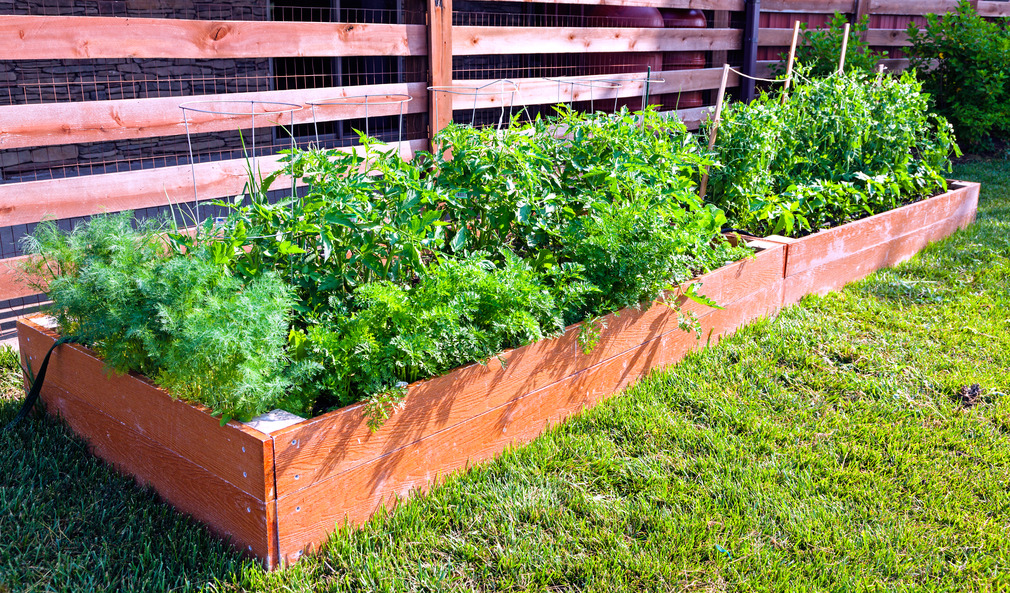
Even if your vegetable garden is the envy of neighbors, it’s still easy to make rookie mistakes that waste precious resources and growing time.

Avis Richards, whose Ground Up Campaign teaches New York City school kids how to grow their own food, reveals the rookie mistakes that all gardeners should avoid.

1. Unwise watering. Too much, too little, too hard, too soft — they’re all watering mistakes that’ll wreck your garden. Before adding water, poke a finger a couple of inches into the soil. If it’s moist, save the water; if it’s dry, train a gentle spray at the base of plants. Better yet, wind a drip hose ($13 for 50 feet) through your garden; that way, you’ll deliver moisture to the roots without wasting water on leaves and to evaporation.

2. Forgetting to test. Even veteran gardeners forget to test their soil every year to make sure it has the pH and nutrients plants need. For about $10, you can send a sample to your state extension service and receive a complete analysis. Or, buy a DIY test kit at your local garden center. When you know what your soil is made of, either select plants that thrive in that type of earth, or amend soil to match your garden’s needs.

3. Planting garden divas. Of course you love summer tomatoes, but they can be tricky to grow during summers that are too hot, too cold, too wet, too dry. So newbies should try growing a couple of tomato plants just for fun, then load gardens with foolproof veggies and herbs, such as beans, peppers, oregano, and parsley. If you must grow a tomato, plant cherry tomatoes that can survive anything summer can throw at them and even yield fruit into fall.

4. Raising too much.
One cherry tomato plant can yield 80 fruit, and a single zucchini plant can keep your neighbors in zucchini bread through winter. So don’t plant more than you can eat, put up, or share with friends. The National Gardening Associationsays an edible garden of about 200 sq. ft. should keep a family of four in veggies all summer. If you do grow more than you need, donate it to a local food bank or plan a swap with fellow gardeners.

5. Growing everything from seed. Some crops, such as salad greens, radishes, carrots, peas, beans, and squash, are easy to grow from seeds that germinate in a couple of weeks. Experience will tell you that eggplant, broccoli, cauliflower, and tomatoes are better grown from seedlings, which someone else has nurtured for months. Pick plants that are short and compact; avoid leggy plants with blooms that are liable to die on the vine as the plant acclimates itself to your garden.

6. Assuming you know.
Gardeners often read seed packages and figure they know everything about growing vegetables. Wrong! The more you know about your hardiness zone, soil, weather, insects, and vegetable varieties, the better your garden will grow. So curl up with a good gardening book, and surf the web for garden bloggers that share your passion. Better yet, join a gardening club where you can share tips and seeds.

7. Relying on pesticides.
Don’t bring out the big guns, which can contaminate the watershed, until you’ve tried less-toxic ways to get rid of garden pests. Ladybugs and praying mantis, which you can buy at garden supply stores, will eat garden intruders, such as aphids and beetles. Non-toxic insecticidal soaps will take care of soft-bodied insects (don’t use if ladybugs are around).

Have you made any rookie mistakes? Got a tip for your fellow newbie gardeners? Let’s hear it!


By: Lisa Kaplan Gordon: © Copyright 2014 NATIONAL ASSOCIATION OF REALTORS®

Guide to Buying and Installing a Sprinkler System

Guide to Buying and Installing a Sprinkler System

An irrigation system saves water, keeps your lawn looking great, and helps maintain your curb appeal. We’ve gathered the info to get you started.

An underground irrigation system delivers water to your landscaping at the right time, and in just the right amount, so you don’t water too much or too little. It’s relatively easy to install and makes a good DIY project.

You’ll also save money doing it yourself. A professionally installed system for a typical ¼-acre lot is $3,000 to $4,000. You can DIY it for under $1,500.

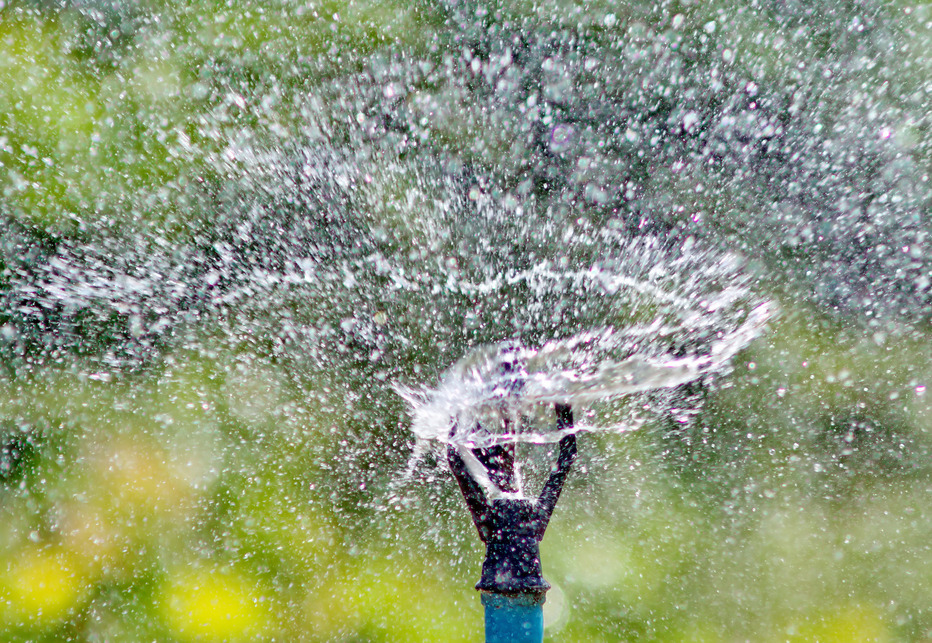
The heart of an underground system is pop-up sprinkler heads. When working, the heads raise up a few inches to spray water on your landscape. When not in use, they drop to ground level so you can mow or walk right over them.

Plus, today’s systems are pretty darn smart. Automated features decide when it’s been raining too much or too little, then adjust the amount of water your landscaping gets. That lowers the worry quotient for you, heads off costly over-watering, and makes the whole system almost maintenance-free.

Getting in the Zone

An irrigation system divides your property into zones. Each zone can be different in terms of the amount of water it gets, and at what time of day it’s watered. Examples of zones include:

  • Lawn zones have pop-up heads with just the right spray radius and range to cover a broad area of grass.
  • Landscaping zones have high-rise heads to water shrubs and ground cover.
  • Flower and vegetable zones may be equipped with bubblers and tiny spray heads that gently water plants without bruising edibles or knocking petals off blooms.

Everything functions on an automatic timer that controls water flow throughout the system. You can elect to include sensors that monitor rain and humidity — self-adjusting timers that prevent unnecessary watering.

Start with a Plan

Your irrigation journey starts with a plan that maps out:

  • Your yard, house location, and major landscaping features, such as trees.
  • Your irrigation zones.
  • The location of sprinkler heads and bubblers.
  • The location of underground water supply lines.
  • The location of a water-supply shutoff valve.
  • Any automatic sensors.

But planning is a challenge for first-timers. Manufacturers recognize this hurdle and go out of their way to provide planning help. After you give them some info on the size of your lot and your water supply system, they give you an irrigation plan tailored to your property.

You’d be crazy not to take advantage of their services. For one, they’re free. Second, they’re very thorough: downloadable guides and step-by-step videos take you through every part of creating a home irrigation system.

For example, Rainbird and Toro offer planning guides that show you how to make a scale drawing of your property, and how to easily gather information on your water pressure and water flow rate that’ll help determine the design of your system.

When you mail in the drawing and info, the manufacturer returns a custom plan with a materials list and detailed installation instructions, all designed specifically for your property. Replies take several weeks. For a small fee ($20-$30), you can have your plans arrive in a few days.

Orbit shows you how to use Google Maps to make a scaled plan of your lot without ever stepping outdoors. Plans are available instantly.

Get Ready to Dig

Your next job is trenching — digging channels in your yard for the water supply lines and sprinkler heads. With plan in hand, mark out the locations of the irrigation lines using string lines, powdered chalk, or lawn marking paint — it comes in a spray can specially designed to be used upside down ($5).

At this point comes a heads-up about your local building codes. You’ll need to ask a couple of questions of your local building and planning commission:

  • Do I need a permit?
  • Is a licensed plumber required to connect my irrigation system to my home’s water system?
  • How deep should the trenches be? (Most building codes require you to dig down 18 inches to protect the water lines from freezing — in colder climates the required depth is more.)

Unless you relish the idea of hand-digging several hundred feet of trench, rent a gas-powered trenching tool for $100–$160 per day. This walk-behind tool makes short work of deep, narrow trenches.

Very important! To prevent injury, be sure to have all utilities marked before you begin digging. Call your local utilities or dial 811.

Installing the System

With excavation complete, you’re ready to buy all the stuff you need. You’ll build your system from plastic pipe, either rigid or flexible PVC. Both are good choices and use the same methods of assembly.

  • Rigid PVC pipe is inexpensive — ¾-inch diameter pipe is about 25 cents per lineal foot.
  • Flex PVC costs more at about $1 per lineal foot of ¾-inch-diameter pipe, but it installs faster, there are fewer connections, and it’s more forgiving of trenches that aren’t perfectly straight.

There are lots of other components, including sprinkler heads and bubblers, and each type has different ranges and arcs — the size and shape of their spray. That’s another reason to check out the manufacturer’s guides — they’ll give you a complete materials list.

Unless you’re an accomplished DIY electrician and plumber, you’ll probably need a bit more professional help:

  • An electrician to extend a circuit to the automatic timer; figure 2-3 hours at $90-$110 per hour.
  • A plumber to tap into your household water system. Budget another $200-$300.

Ready to Call In the Pros?

If the DIY approach is more than you want to tackle, or your lot is larger than a third of an acre (14,500 sq. ft.), consider hiring a pro. Expect to pay $3,000-$4,000 to have an underground irrigation system installed on a ¼-acre lot.

Aside from saving you a lot of work, a pro is going to get the job done quickly and with minimal disruption. He’ll also come with knowledge of what design best suits local conditions.

Good Tips for Watering Your Landscape

  • Check out these low-cost, low-maintenance DIY watering systems.
  • Planning a trip this summer? Here’s how to water while you’re on vacation.
  • Dry spells are hard on your plants. Make sure you know how to water your plants during a drought.

By: Dave Toht: © Copyright 2014 NATIONAL ASSOCIATION OF REALTORS®


Real Christmas Trees vs. Fake Christmas Trees: Which are Greener?

Real Christmas Trees vs. Fake Christmas Trees: Which are Greener?

How do real Christmas trees and fake Christmas trees stack up when it comes to the environment and cost? We’ve got the dirt.

Real Christmas trees are better for the environment than fake Christmas trees: They’re renewable and recyclable, unlike that petroleum-derived faux model.

In terms of price there’s not much difference between the real and fake varieties, unless you get really fancy with a fake. Depending on where you live and the size and species of tree you buy, the real deal runs about $20 to $150 annually.

You can pick up a basic fake Christmas tree for less than $20 at some big-box retailers. Prices go up from there to as much as $430 for a deluxe, already-lit number. Keep a faux tree in the family for at least a decade to goose up your holiday gift fund and mitigate the pileup in your local landfill.

If you insist on replacing your fake tree every year to change things up, donate your old one to a charity, a resale shop, or Freecycle.

All I Want for Christmas is the Greenest of Trees. What Do I Look For?

  • Visit a local Christmas tree farm. Christmas tree farmland often can’t be used for other crops, says Brian Clark Howard, an environmental reporter. When the tree farmers plant new trees, the growing young trees combat climate change by absorbing carbon. And tree farms conserve soil — farmers only till the land once every six or eight years.

    If you buy from a Christmas tree lot, your tree was likely shipped from Oregon or North Carolina, and getting it to you created pollution, Howard says.

  • Do business with a local Christmas tree farmer who grows organic Christmas trees without pesticides. Whether an organic tree costs more depends on where you live.


By: G. M. Filisko;© Copyright 2014 NATIONAL ASSOCIATION OF REALTORS®

LED Holiday Lights: 6 Need-to-Know Tips

LED Holiday Lights: 6 Need-to-Know Tips

LED holiday lights vs. old-fashioned bulbs: 6 tips to help you decide which is right for you.

Should you chuck all your good old holiday light strings and buy new LED holiday lights? Here’s how to decide.

1.  LED holiday lights save you money. LED lights use up to 90% less energy than traditional holiday lights, according to the U.S. government’s Energy Star program.

That results in a $50 energy savings for the average family during the holidays, says a Sierra Club spokesperson.

Put it into perspective: The amount of electricity consumed by one 7-watt incandescent bulb (in a light string) could power 140 LEDs — enough to light two 24-foot strings, says Energy Star.

2.  But LED lights typically cost more than old-fashioned holiday lights.

  • 100-bulb string of LED lights: about $20 to $46
  • 100-bulb string of conventional lights: about $7 to $12

But shop around because LED prices are coming down. And you’ll likely find sales on LED holiday lights — if not before the holidays then certainly after.

3.  LED holiday lights last and last. LED bulbs can keep your season bright for as long as 100,000 hours, says Cathy Choi, president of Moonachie, N.J.-based Bulbrite, which manufactures LED and regular bulbs. That’s substantially longer than the life of your old holiday light strings.

4. You can string a BIG strand of LED lights. Safety wise, you shouldn’t connect more than three traditional light strings, but you can connect up to 87 LED holiday light strings, totaling a whopping 1,500 feet, Choi says. So blow your neighbor’s display away by cocooning your house in lights:

  • You won’t have to buy as many extension cords.
  • You can take your holiday lighting display further away from the outlet.

5. LED lights reduce the risk of fire. They stay cooler than incandescent bulbs, according to Energy Star.

6. How about that hue? Some people stick with their old lights because they don’t like the brighter hue that white LED holiday lights emit. But Choi says manufacturers now offer a “warm white” bulb that more closely mimics the glow of an incandescent light. Be sure to read the label to choose a bright or warm white and to ensure what you’re purchasing is Energy Star-certified.

Colored and color-changing LED holiday lights are more vibrant than conventional lights, making your display easier to see from the street, Choi says.


By: G. M. Filisko;© Copyright 2014 NATIONAL ASSOCIATION OF REALTORS®


The owner of this website has made a commitment to accessibility and inclusion, please report any problems that you encounter using the contact form on this website. This site uses the WP ADA Compliance Check plugin to enhance accessibility.