

5 Things You Need to Ask Yourself Before Turning Down a Low-Ball Offer

5 Things You Need to Ask Yourself Before Turning Down a Low-Ball Offer

A low-ball offer on your home feels insulting, but before you say ‘no,’ ask yourself these questions.

It’s the place you’ve lived for years — maybe even decades. The pencil marks measuring each kid’s height are still behind the pantry door, and the sapling you planted in the front yard is now a towering tree.

You’ve invested a great deal in this house. So when the time comes to put it on the market, you expect potential buyers to recognize its true value. But sometimes, you get an offer that’s so far below your asking price it feels like someone pitched a baseball straight at your stomach.

Should you simply walk away from such a number? Or does it make sense to pause and weigh your options? Here are some points to consider before you decide:

1.  Is It Really Low-Ball, or Just Lower Than I Wanted?

Some agents define a low-ball offer as 25% or more below list. In areas where there’s a shortage of available homes, that figure may drop to 20%.

“What defines low-ball varies from market to market and even submarket to submarket, but certainly from price range to price range,” says Steve McLinden of Bankrate.com. In other words, it’s likely that an offer of $80,000 on a $100,000 home will be more quickly dismissed than a $1.6 million offer on a $2 million home, he says.

2.  Should I Immediately Reject a Low-Ball Bid?

Although your feelings may be hurt, giving in to the drama monster won’t get your house sold. “When the low-ball offer comes in it can be upsetting, but it doesn’t have to be,” says Bill Gassett of RE/MAX Executive Realty in Hopkinton, Mass. “The fact that someone wants to buy your home is a good thing and you should deal with every offer — unless it’s just completely ridiculous.”

What constitutes a “ridiculous” offer? Anything significantly less than 25% below your list price should probably trigger warning bells. However, it pays to rely on your agent’s expertise to help you decide on the right response.

Countering, rather than ignoring, a low offer is often the smartest strategy. A low-ball offer “shows buyers you’re willing to work with them,” says Eric Snyder of Douglas Elliman in Boca Raton, Fla. After all, he reasons, “it’s not about where buyers start, it’s where they end up.”

And you’ll never have a chance of getting to that final number if you allow your emotions to cloud your judgment.

3.  Is My Price Too High?

Sometimes when a seller receives one — or more — low-ball bids, it may be because the asking price for the home is out of step with the market.

Before you set a price, your agent will provide you with comps – for-sale listings of similar properties in the area —  along with a pricing recommendation. Your best bet is pricing that reflects the comps. If you decide to “test” a higher price, you might have to tweak your price to invite more reasonable offers, which is just going to delay the sale.

4.  What Do I Really Need?

There may be factors involved in selling your home that are more important to you than price. Perhaps you need to sell quickly because you’re buying another home. Maybe an all-cash deal would make your life a lot easier. There are a number of potential deal sweeteners that a potential buyer could provide that may make a low offer more appealing. These include:

  • A preferred closing date
  • A solid mortgage pre-approval letter from the buyer (not just a pre-qualification)
  • A larger down payment
  • Fewer inspection contingencies

5.  Will I Look Too Desperate?

Don’t worry about how your willingness to entertain a low-ball offer is perceived. What matters most is the result, says McLinden.

“Some sellers get so wrapped up in righteous indignation following an ‘insulting’ offer that they tell their agent to refuse all further communication from the offender,” he says. And while that may soothe your wounded ego, it won’t help sell your house.



By: Lisa Kahn:© Copyright 2015 NATIONAL ASSOCIATION OF REALTORS®

Do Halloween Dangers Lurk at Your Entryway?

Do Halloween Dangers Lurk at Your Entryway?

Is your front entryway ready for Halloween visitors? Keep everything fun and accident-free with these seven safety tips.

Everyone loves a good scare on Halloween — as long as it’s just a trick.

To help you avoid any real-life scares — such as falls, fires, and traffic accidents — around your property this All Hallows Eve, play it safe while you’re setting up your Halloween lights and decorations.

Here are seven simple precautions recommended by John Pettibone, curator of Hammond Castle, a Gloucester, Mass., mansion that draws thousands to its renowned 20-room haunted house every Halloween season.

1. Light the Scene

Providing plenty of illumination ensures that your visitors can see where they’re walking, helping to avoid missteps and falls. Pettibone suggests using the highest wattage bulbs your outdoor lighting fixtures can safely take (check the label on the socket), and adding landscape lights every few feet along your front walk.

“We use the solar-powered kind because there’s no wiring needed,” he says. “Just push them into the ground, let them soak up the sun during the day, and they’ll light up the walk after dark.”

2. Secure the Footing

Clear your walk, steps, and stoop of any obstructions that could trip youngsters focused more on tricks and treats than watching where they’re going. That means moving potted mums and jack o’lanterns out of the way, and hammering down any nail heads protruding out of your steps.

If you have a concrete stoop, which can get slippery when wet, apply friction tape ($16 for a 60-foot roll of 1-inch-wide tape) to ensure stable footing, says Pettibone. He also stocks up on chemical ice melt ($20 for a 50-lb. bag) just in case of an early freeze.

3. Tighten the Railings

If your porch railings are wobbly or broken, family members and friends may know not to lean too heavily on them, but Halloween visitors won’t. So hire a contractor or handyman to fix the problem. It’ll make your home safer for guests all year round. Because more strangers come to your front door this night than the rest of the year combined, now is the time to take care of it.

4. Eliminate Fire Hazards

Don’t put real candles into your carved pumpkins or paper lanterns. “That’s a fire waiting to happen,” says Pettibone. Instead, pick up a bulk pack of LED-bulb faux candles, which emit a yellowish, flickering, battery-powered light that looks amazingly similar to the real thing — without the danger.

5. Secure your Property

To prevent burglaries and Halloween pranks — especially on mischief night the previous evening — make sure to keep all windows and doors (other than your main door) locked shut.

You might have an electrician add motion-sensor lights around your property, so anyone who walks down your driveway or around into the backyard will be discouraged from intruding any farther.

6. Set the Scene

In addition to spooky items like cotton cobwebs and half-buried skeletons, consider a few safety-related scene-setters. Pettibone suggests propping open the screen or storm door so it doesn’t get in the way when there’s a big group of kids congregated on your stoop. “We use yellow caution tape to tie open the door,” he says. “You can order it online and it works well with the Halloween theme.” A 1,000-ft. roll of 3-inch-wide caution tape is about $8.

You’ll also want a working doorbell, so if yours is broken, either hire an electrician or handyman to fix it — or install a wireless doorbell in its place.

7. Enhance Street Safety

Four times as many child pedestrians get killed on Halloween night than a normal night. So limit the danger as much as you can by clearing parked cars off the curb to allow better visibility and placing a reflective “watch for children sign” at the edge of the road. For for high-traffic roads in Halloween-intensive neighborhoods, consider posting an adult in the street with a hand-held traffic control light to help maintain safety.


By: Oliver Marks: © Copyright 2015 NATIONAL ASSOCIATION OF REALTORS®


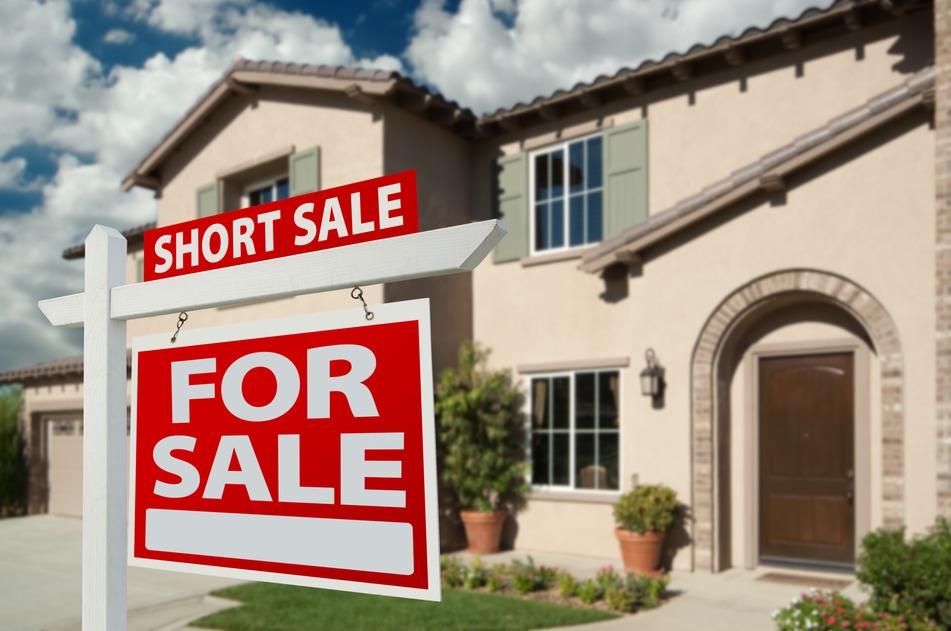
6 Tips for Buying a Home in a Short Sale

6 Tips for Buying a Home in a Short Sale

By preparing for a real estate short sale, you can emerge with a great home at a favorable price.

When sellers need to sell their home for less than they owe on their mortgage, they’re shooting for a short sale. Short sale homes can sometimes be bargains, but only if you do your homework, stay patient, and remain unemotional during the sometimes lengthy and difficult short sale process.

Here are six tips for protecting yourself emotionally and financially when bidding on a short sale.

1. Get help from a short sale expert

A real estate agent experienced in short sales can identify which homes are being offered as short sales, help you determine a purchase price, and advise you on what to include in your offer to make the lender view it favorably. Ask agents how many buyers they’ve represented in short sales and, of those, how many successfully closed the transaction.

2. Build a team

Ask agents to recommend real estate attorneys knowledgeable in short sales and title experts. A title officer can do a title search to identify all the liens attached to a property you’re interested in. Because each lienholder must consent to a short sale, a property with multiple liens, like first and second mortgages, mechanic’s and condominium liens, or homeowners association liens, will be harder to purchase.

A title search may cost $250 to $300 up front, but it can help weed out less desirable properties requiring multiple approvals.

3. Know the home’s fair market value

By agreeing to a short sale, lenders are consenting to lose money on the loan they made to the sellers to purchase the home. Their goal is to keep those losses as low as possible. If your offer is dramatically less than the home’s fair market value, it may be rejected. Your agent can help you identify the price that’s good for you. The lender will determine whether approval is in its best interest.

4. Expect delays

There are two stages to a short sale. First, the sellers must consent to your purchase offer. Then they must submit it to their lender, along with documentation to convince the lender to agree to the sale.

The lender approval process can take weeks or months, even longer if the lender counteroffers. Expect bigger delays if several lienholders are involved; each can make a counteroffer or reject your offer.

5. Firm up your financing

Lenders will weigh your ability to close the transaction. If you’re preapproved for a mortgage, have a large downpayment, and can close at any time, they’ll consider your offer stronger than that of a buyer whose financing is less secure.

6. Avoid contingencies

If you must sell your current home before you can close on the short-sale property, or you need to close by a firm deadline, your offer may present too many moving parts for a lender to approve it.

Also, consider ordering an inspection so you’re fully informed about the home. Keep in mind that lenders are unlikely to approve an offer seeking repairs or credits for such work. You’ll probably have to purchase the home “as is,” which means in its present condition.

This article includes general information about tax laws and consequences, but isn’t intended to be relied upon by readers as tax or legal advice applicable to particular transactions or circumstances. Consult a tax professional for such advice; tax laws may vary by jurisdiction.

More from HouseLogic

What you need to know about the homebuyer tax credit
How to claim your homebuyer tax credit

Other web resources

Real-life discussions of short sales

G.M. Filisko is an attorney and award-winning writer who luckily has avoided the need for a short sale on her properties. A frequent contributor to many national publications including Bankrate.com, REALTOR® Magazine, and the American Bar Association Journal, she specializes in real estate, business, personal finance, and legal topics.


By: G. M. Filisko© Copyright 2015 NATIONAL ASSOCIATION OF REALTORS®


Keep Your Home Sale from Falling Apart

Keep Your Home Sale from Falling Apart

After finding a buyer, all you have to do to make it to closing is to avoid these five traps.

Finding a buyer for your home is just the first step on the homeselling path. Tread carefully in the weeks ahead because if you make one of these common seller mistakes, your deal may not close.

Mistake #1: Ignore Contingencies

If your contract requires you to do something before the sale, do it. If the buyers make the sale contingent on certain repairs, don’t do cheap patch-jobs and expect the buyers not to notice the fixes weren’t done properly.

Mistake #2: Don’t Bother to Fix Things That Break

The last thing any seller needs is for the buyers to notice on the pre-closing walk-through that the home isn’t in the same condition as when they made their offer. When things fall apart in a home about to be purchased, sellers must make the repairs. If the furnace fails, get a professional to fix it, and inform the buyers that the work was done. When you fail to maintain the home, the buyers may lose confidence in your integrity and the condition of the home and back out of the sale.

Related: 10 Common Repair Costs

Mistake #3: Get Lax About Deadlines

Treat deadlines as sacrosanct. If you have three days to accept or reject the home inspection, make your decision within three days. If you’re selling, move out a few days early, so you can turn over the keys at closing.

Mistake #4: Refuse to Negotiate Any Further

Once you’ve negotiated a price, it’s natural to calculate how much you’ll walk away with from the closing table. However, problems uncovered during inspections will have to be fixed. The appraisal may come in at a price below what the buyers offered to pay. Be prepared to negotiate with the buyers over these bottom-line-influencing issues.

Related: How to Field a Lowball Purchase Offer

Mistake #5: Hide Liens from Buyers

Did you neglect to mention that Uncle Sam has placed a tax lien on your home or you owe six months of homeowners association fees? The title search is going to turn up any liens filed on your house. To sell your house, you have to pay off the lien (or get the borrower to agree to pay it off). If you can do that with the sales proceeds, great. If not, the sale isn’t going to close.

Related:

  • How Much Value Does Regular Maintenance Add to Your Home?
  • 7 Steps to a Stress-Free Home Closing

G.M. Filisko is an attorney and award-winning writer who wanted a successful closing on a Wisconsin property so bad that she probably made her agent rethink going into real estate. A frequent contributor to many national publications including Bankrate.com, REALTOR® Magazine, and the American Bar Association Journal, she specializes in real estate, business, personal finance, and legal topics.

By: G. M. Filisko© Copyright 2015 NATIONAL ASSOCIATION OF REALTORS®


Kicking Off National Homeownership Month!

Kicking Off National Homeownership Month!

Kicking Off National Homeownership Month! | Keeping Current Matters

National Homeownership Month actually started as a week-long celebration of homeownership during the Clinton administration in 1995. In 2002, President George W. Bush proclaimed June as the National Homeownership Month. Here is an excerpt from his proclamation:

“Homeownership is an important part of the American Dream…A home provides shelter and a safe place where families can prosper and children can thrive. For many Americans, their home is an important financial investment, and it can be a source of great personal pride and an important part of community stability.”

“Homeownership encourages personal responsibility and the values necessary for strong families. Where homeownership flourishes, neighborhoods are more stable, residents are more civic-minded, schools are better, and crime rates decline.”

“During National Homeownership Month, I encourage all Americans to learn more about financial management and to explore homeownership opportunities in their communities. By taking this important step, individuals and families help safeguard their financial futures and contribute to the strength of our Nation.”

If you are one of the many renters out there who would like to make the transition from renter to homeowner, contact a local real estate professional who can help evaluate your ability to do so.
Marcos Fullana, local real estate professional 305-385-8342 / mk@choiceone.us Choice One Real Estate Miami, Cutler Bay, Palmetto Bay, Pinecrest, Coral Gables
Choice One Key Title and Escrow is presented award

Choice One Key Title and Escrow is presented award

Representing Key Title and Escrow, Kim Chavez, president of the firm was presented with the Foundation of Excellence Award. This award is awarded to top title agents in the industry for Outstanding Performance in Claims Prevention. In addition to the Excellence Award Key Title and Escrow was also presented with the Heritage Award for over 10 years of outstanding professional service. These awards were presented by industry leading title underwriter Stewart Title.

Choice One Key Title and Escrow is located at 18400 SW 97 Ave. Cutler Bay, FL. 33157. Providing real estate title and escrow closing service fast, accurate and statewide. You may contact Key Title and Escrow at 305-235-4571 or email kim@titleescrow.us


The owner of this website has made a commitment to accessibility and inclusion, please report any problems that you encounter using the contact form on this website. This site uses the WP ADA Compliance Check plugin to enhance accessibility.