Gorgeous Ideas to Make Home Maintenance Less of a Pain

Gorgeous Ideas to Make Home Maintenance Less of a Pain

Tired of home maintenance chores? So are we. That’s why we love these easy-care features that free up your free time — and do it beautifully.
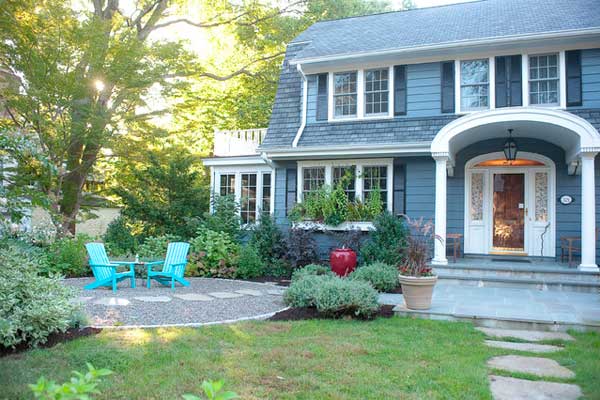
1.  Front Yard Patio

Patio in the front yard of a houseImage: Westover Landscape Design, Inc.Lawns are classic suburbia; they’re also classic maintenance time-sucks. Good-looking patios, on the other hand, don’t need mowing, watering, or fertilizing. Ever. Be a trend-setter and put one in your front yard for you to enjoy and your neighbors to envy. A professionally installed brick or flagstone patio runs $15 to $18 per square foot.

2.  Vinyl Shake Siding
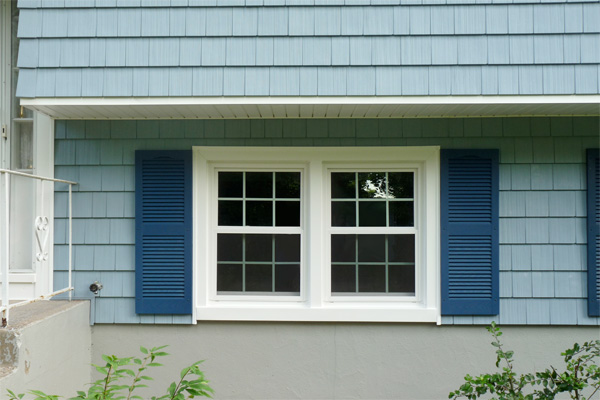
Vinyl shake siding on the exterior of a houseImage: Essex Home Improvements, Inc.Vinyl shakes look as beautiful as real wood but they won’t crack, rot, fade, or need periodic staining and sealing. Even better: At $2 to $7 per square foot, installed, they’re about half the price of real wood shakes. Lots of colors available. Did we say that bugs don’t like them, either? Well, they don’t!

3.  Quartz Countertop
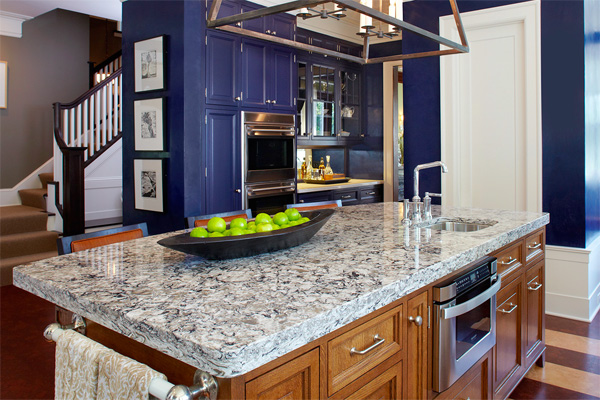
Low-maintenance quartz countertop in a kitchenImage: Bellingham from Cambria’s Waterstone Collection

Everyone seems to love granite — until it’s time to reseal it. You can get a look that’s just as gorgeous with engineered quartz countertops. Made with 95% quartz (one of the hardest known materials), a quartz countertop shrugs off stains, scratches, and germs (it’s antimicrobial). Cost is $40 to $100 per square foot, installed, about the same as granite. But — unlike granite — a quartz countertop is non-porous and never needs to be resealed. For that reason, quartz countertops are starting to rival granite as the preferred choice.

4.  Fiberglass Entry Door
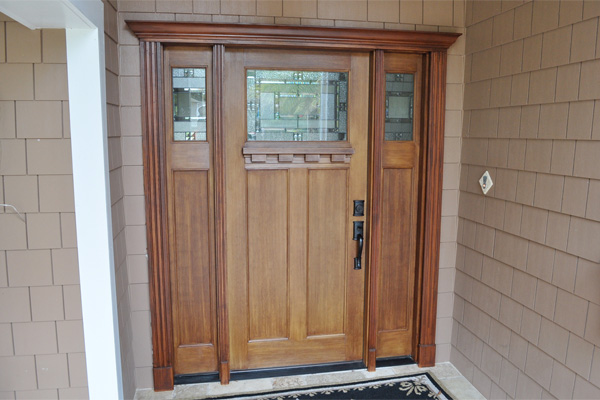
Fiberglass entry door on a homeImage: Heckard’s DoorWhat looks like and feels as beautiful as wood, stains like wood, but never chips, warps, or cracks? Answer: fiberglass. All of which makes fiberglass an ideal material for high-style, low-fuss entry doors that mimic oak, mahogany, walnut, fir, and other woods. Average installed cost for this cool curb appeal upgrade: about $3,000.

5.  Shaker-Style Cabinets
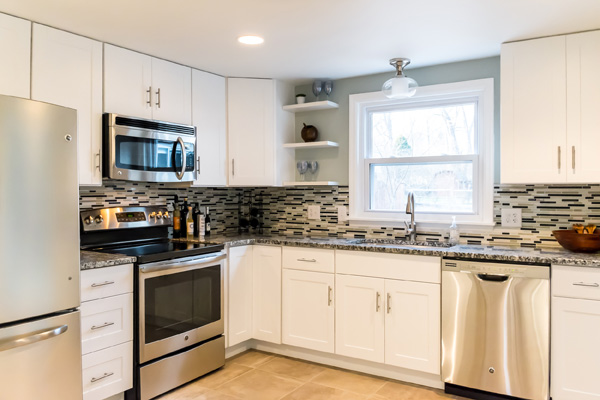
Shaker-style white kitchen cabinets in homeImage: Dwelling Studio / All Around Joe Construction

Can style be low-maintenance and gorgeous, too? Of course! These Shaker-style kitchen cabinets, with their simple lines and absence of frills and trills, make cleanup a snap. They also fit with most any design, from traditional to modern. Order them with a tough factory finish that resists stains.

6.  Turf Grasses
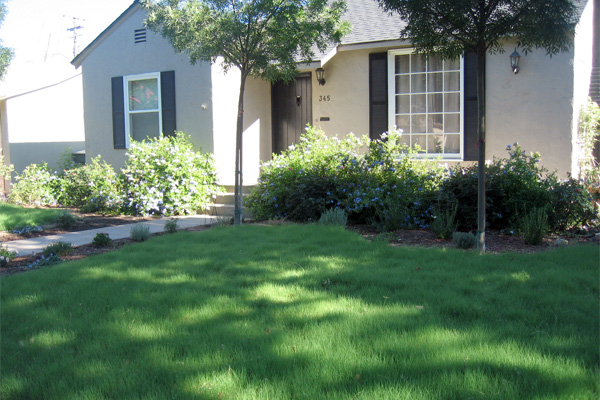
Buffalo grass front lawnImage: Takao NurseryIf you love a lawn but hate the upkeep, go alternative. Lush, green turf grasses are beautiful and specially formulated so they’ll grow well in various climates. Once established, turf grasses, like the buffalo grass shown here, require very little watering or mowing, and virtually no fertilizers or pesticides.

7.  Direct-Vent Gas Fireplace
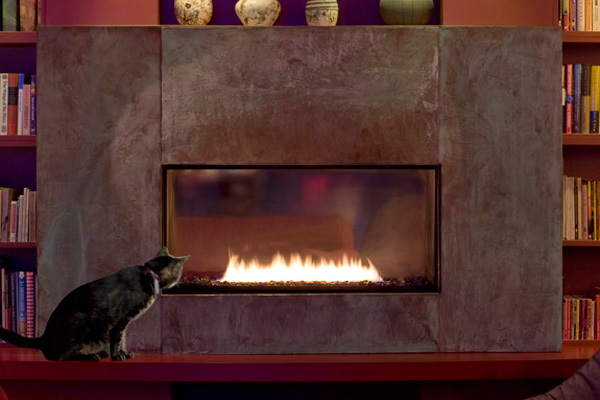
Cat next to direct vent fireplace in living room
Image: Spark Modern Fires

OK, you’re not Grizzly Adams. You don’t care for chopping firewood, cleaning a sooty hearth, or paying somebody to sweep the chimney every year. But you still like to curl up in front of a blazing fire. Solution: A gorgeous direct-vent gas fireplace ($2,000 to $5,000) burns clean, is energy-efficient, and throws off tons of ambiance.

8.  Manufactured Stone Veneer
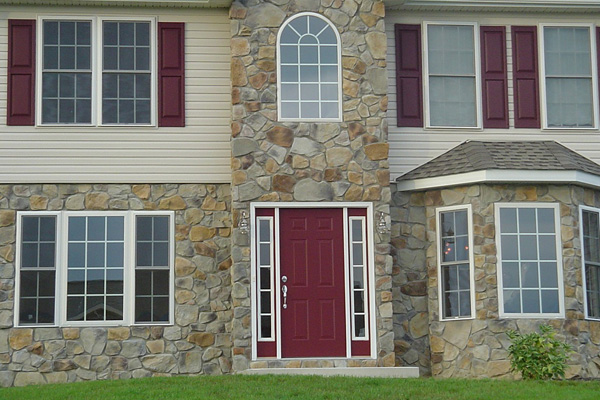
Stone veneer on the exterior of a homeImage: Eldorado Stone

One of our favorite faux finishes, gorgeous manufactured stone veneer won’t split, crack, or fade. At about $18 per square foot installed, it isn’t cheap, but “Remodeling” magazine’s “Cost vs. Value Report” says you’ll recoup about 92% of your investment at resale — one of the highest returns in the report.

9.  Drought-Resistant Landscape Plants

Flowering azaleas in a home's yard
Image: Abby Farson Pratt

Azaleas like these are in the genus Rhododendron, a group of woody shrubs that grow in many different climates and have showy spring blossoms. Beautiful azaleas are tough and hardy once rooted into well-drained soil, making upkeep easy and reducing the need for water.

Related: 8 Remodeling Choices That Keep the Home Maintenance Monkey Off Your
By: John Riha:HouseLogic© Copyright 2015 NATIONAL ASSOCIATION OF REALTORS®
9 Surprising Things That Add Value to Your House

9 Surprising Things That Add Value to Your House

Published: December 3, 2013

A home’s value is dependent on many things. Here are nine factors you might not have thought about.

What do surf breaks, Walmarts, and public transportation have in common? Being near any of them can add thousands to your home’s value.

At least that’s what various university researchers have found based on their evaluation of variables that could be influencing home prices. Their conclusions might surprise you. Here’s what they found:

1. Surf Breaks

Being within a mile of a surf break (a spot where surf-able waves happen) adds about $106,000 to a home’s value, according to surfonomics experts at the Monterey Institute of International Studies.

Reality check: Mother Nature makes surf breaks, so it’s not like you could build your own DIY break to boost your home’s value.

2. Parks and Open Spaces

A desirable public park or other recreational open space boosts the property value of nearby homes by 8%-20%.

One study looked at 16,400 home sales within 1,500 feet of 193 public parks in Portland, Ore., and found these boosts to home values:

  • Natural areas: $10,648
  • Golf courses: $8,849
  • Specialty parks: $5,657
  • Urban parks: $1,214

Reality check: A park that’s not maintained and overcrowded can drag down nearby home values.

3. Living Near a Walmart

Along with making it easier to run out for a gallon of milk at midnight, researchers at the University of Chicago concluded that living within a mile of a Walmart store could raise your home’s value by 1%-2%, and living within half a mile could boost your property value by an additional 1%.

For an average-size home, that’s an uptick of $4,000-$7,000.

Realty check: What you gain in home value, you may end up spending at Walmart.

4. Solar Photovoltaic Systems

California homes with solar photovoltaic (PV) systems sell for a $17,000 premium over homes without solar systems, according to research from the U.S. Department of Energy’s Lawrence Berkeley National Laboratory.

Reality check: Although costs for residential solar power systems are falling, they’re still rather pricey at $15,000-$40,000, depending on the size of your house.

Related: Tax Credits for Installing Solar Panels

5. Walkability

Being able to stroll to schools, parks, stores, and restaurants will raise your property value anywhere from $4,000-$34,000, says a 2009 study from CEOs for Cities.

Reality check: The biggest boost in walkability values occurred in large, dense cities.

Related: Boost Your Neighborhood’s Walkability

6. Accessory Dwelling Units

Whether it’s a granny flat, an in-law apartment, or a carriage house, having a separate unit can increase your home’s value by 25%-34%, according to a study of 14 properties with accessory dwelling units in Portland, Ore. You can also get a steady stream of income from a second unit.

Reality check: Local governments often ban accessory dwelling units, so check zoning laws, building codes, and homeowners association rules before you add a unit.

7. Professional Sports Arenas

A new pro sports stadium can raise property values in a 2.5-mile radius by an average of $2,214. The closer you are to the new facility, the larger the increase in home value. Researchers from the University of Illinois at Urbana-Champaign and the University of Alberta examined house sales in Columbus, Ohio, before and after the city added two sports stadiums.

Reality check: If a stadium is proposed, home values can decline a bit until the project is complete. And if you live really close to a stadium, you may encounter traffic and parking issues.

8. Community Gardens

Planting a community garden raises the value of homes within a 1,000-foot radius by 9.4% within five years, according to research by the Office of the Comptroller of the Currency and New York University School of Law.

The impact increases over time, and high-quality community gardens have the greatest positive influence. Poor neighborhoods saw the biggest gains in home values.

Reality check: Gardens on privately owned land and in higher-income neighborhoods don’t have the same beneficial influence.

9. Trees

No real surprise here — whether trees are in your yard or just on your street, they’re a valuable asset you should be aware of. Here’s a gauge of how much trees are worth to your home value according to a University of Washington research survey:

  • Mature trees anywhere in your yard: 2%.
  • Mature trees on your street: 3%.
  • Trees in your front yard: 3%-5%.
  • Mature trees in high income neighborhoods: 10%-15%.

Reality check: Trees usually mean work — raking leaves, trimming branches, and keeping roots out of sewer lines.


By: Dona DeZube:Copyright 2015 NATIONAL ASSOCIATION OF REALTORS®
Do Your Windows Have the Power to Melt the House Next Door?

Do Your Windows Have the Power to Melt the House Next Door?


If neighbors’ vinyl siding has mysteriously warped, energy-efficient windows might be the culprit.

With a fair amount of buzz recently about how some energy-efficient windows can create a laser-beam effect that warps siding on a neighboring house, we thought we’d check into the hubbub.

Bottom-line: It doesn’t mean you should abandon your decision to invest in low-e (low-emissive) windows, which limit heat transfer so that your house stays cool or warm. In fact, some areas require low-e windows on new homes or in retrofits.

Anyway, the melting tends to occur under a perfect storm of conditions — so not very often.

Still, we’ve got some tips for you, below, in case your window or your neighbor’s window has turned into a ray gun.

Probably a more important issue is whether you need to replace your windows at all. Our guide can help you make that decision.

What Causes the Laser Beam?

Here’s one theory from the National Association of Home Builders (NAHB): Changes in barometric pressure can sometimes cause low-e windows to bow inwards and magnify reflected sunlight. It’s like training a magnifying glass on an ant; the heat beam toasts anything in its path to more than 200 degrees Fahrenheit. Vinyl siding starts to warp at around 165 degrees.

But a white paper published by the Lawrence Berkeley National Laboratory says there’s been no extensive study on the topic, so whatever is causing the melting isn’t fully understood. Here’s what is known:

  • Warping could happen any time of year.
  • South-facing low-e windows appear to be responsible for a large number of incidents.
  • Damage to neighboring homes happens where houses are close together — up to 20 feet, according to the International Association of Certified Home Inspectors.

What are Industry Insiders Saying?

The Vinyl Siding Institute acknowledges the problem, but claims that heat distortion from low-e windows is rare. However, the NAHB says that as low-e windows have become more prevalent, melted vinyl siding has become more common. So much so that major vinyl siding manufacturers have updated their warranties to exclude heat damage caused by windows.

How Do I Stop the Laser Beam Effect?

To keep a window from cooking stuff in its path, including your deck furniture or car:

  • Install windows screens over the outer window. This will diffuse the reflected sunlight.
  • Block the sun from hitting low-e windows by adding window awnings.
  • Add a living privacy screen that will block the reflected rays from hitting your home.

Related: Well-placed trees and shrubs are natural energy-efficiency boosters.

To protect vinyl siding:

  • Add a privacy screen.
  • Replace damaged siding with heat-resistant vinyl siding.

Note: Heat-resistant siding can only withstand temps of up to 220 degrees. Plus, it costs up to three times the price of the regular siding.

Published: November 13, 2013

By: Deirdre Sullivan:© Copyright 2015 NATIONAL ASSOCIATION OF REALTORS®

 
What do I mean when I say MLS?

What do I mean when I say MLS?

Odds are you’ve spent a little time online searching for homes. After all, most home searches begin online. You may have even used a broker’s website or a site like Trulia or Zillow to help you browse listings.

But where does listing information come from?

Way back in the day, prior to the Information Age revolution, brokers used to gather and exchange information about their properties. The idea was fairly straightforward: I’ll help you sell your properties if you help me sell mine. It’s a “private offer of cooperation and compensation.” Cooperation meant the real estate industry could thrive and buyers and sellers could enjoy smoother transactions.

This spirit of cooperation gave rise to Multiple Listing Service(s) (MLS). By consolidating information about housing inventory in an MLS, listing brokers and buyers’ brokers can easily share up-to-date information about homes on the market. Though an MLS is typically a private database available to brokers, much of the information is syndicated to outside sites in the interest of casting wider net for buyers and sellers.

As an MLS is the primary source of information about a property, it tends to be the most accurate. It may also contain private information for use by brokers only, such as times the home is available for showings and seller contact information.

There are upwards of 850 MLS databases in the U.S. alone, and to a certain extent, there is market pressure to centralize these into a national MLS database. We’re sure to see changes in how Multiple Listing Services are used in the future, but the core benefits to home sellers and buyers is sure to remain.

Ready to put the power of an MLS to work for you? Search with me today for homes on the market right now. I’d be happy to help you find your next home:

Marcos Fullana 786-385-8342 or email: mk@choiceone.us.Marcos Fullana 786-385-8342

What Not to Do as a New Homeowner

What Not to Do as a New Homeowner

If you’re new to homeownership, you’ll definitely want to avoid these easy-to-prevent mistakes that could cost you big time.

We know so well the thrill of owning your own house — but don’t let the excitement cause you to overlook the basics. We’ve gathered up a half dozen classic boo-boos new homeowners often commit — and give you some insight on why each is critically important to avoid.

1. Not Knowing Where the Main Water Shutoff Valve Is

Water from a burst or broken plumbing pipe can spew dozens of gallons into your home’s interior in a matter of minutes, soaking everything in sight — including drywall, flooring, and valuables. In fact, water damage is one of the most common of all household insurance claims.

Quick-twitch reaction is needed to stave off a major bummer. Before disaster hits, find your water shutoff valve, which will be located where a water main enters your house. Make sure everyone knows where it’s located and how to close the valve. A little penetrating oil on the valve stem makes sure it’ll work when you need it to.

2. Not Calling 811 Before Digging a Hole

Ah, spring! You’re so ready to dig into your new yard and plant bushes and build that fence. But don’t — not until you’ve dialed 811, the national dig-safely hotline. The hotline will contact all your local utilities who will then come to your property — often within a day — to mark the location of underground pipes, cables, and wires.

This free service keeps you safe and helps avoid costly repairs. In many states, calling 811 is the law, so you’ll also avoid fines.

3. Not Checking the Slope of Foundation Soil

The ground around your foundation should slope away from your house at least 6 inches over 10 feet. Why? To make sure that water from rain and melting snow doesn’t soak the soil around your foundation walls, building up pressure that can cause leaks and crack your foundation, leading to mega-expensive repairs.

This kind of water damage doesn’t happen overnight — it’s accumulative — so the sooner you get after it, the better (and smarter) you’ll be. While you’re at it, make sure downspouts extend at least 5 feet away from your house.

Related: How to Prevent Water Damage

4. Not Knowing the Depth of Attic Insulation

This goes hand-in-hand with not knowing where your attic access is located, so let’s start there. Find the ceiling hatch, typically a square area framed with molding in a hallway or closet ceiling. Push the hatch cover straight up. Get a ladder and check out the depth of the insulation. If you can see the tops of joists, you definitely don’t have enough.

The recommended insulation for most attics is about R-38 or 10 to 14 inches deep, depending on the type of insulation you choose. BTW, is your hatch insulated, too? Use 4-inch-thick foam board glued to the top.

Related: Attic Air Leaks: How to Find and Seal Them

5. Carelessly Drilling into Walls

Hanging shelves, closet systems, and artwork means drilling into your walls — but do you know what’s back there? Hidden inside your walls are plumbing pipes, ductwork, wires, and cables.

You can check for some stuff with a stud sensor — a $25 battery-operated tool that detects changes in density to sniff out studs, cables, and ducts.

But stud sensors aren’t foolproof. Protect yourself by drilling only 1¼ inches deep max — enough to clear drywall and plaster but not deep enough to reach most wires and pipes.

Household wiring runs horizontally from outlet to outlet about 8 inches to 2 feet from the floor, so that’s a no-drill zone. Stay clear of vertical locations above and below wall switches — wiring runs along studs to reach switches.

6. Cutting Down a Tree

The risk isn’t worth it. Even small trees can fall awkwardly, damaging your house, property, or your neighbor’s property. In some locales, you have to obtain a permit first. Cutting down a tree is an art that’s best left to a professional tree service.

Plus, trees help preserve property values and provide shade that cuts energy bills. So think twice before going all Paul Bunyan.

 
By: John Riha:© Copyright 2015 NATIONAL ASSOCIATION OF REALTORS®

The owner of this website has made a commitment to accessibility and inclusion, please report any problems that you encounter using the contact form on this website. This site uses the WP ADA Compliance Check plugin to enhance accessibility.